Fry bacon on Sunday morning, and you can probably still smell it in the upstairs hallway on Monday. That smell is the one piece of cooking pollution you can actually notice. The gases and fine particles riding along with it are drifting through your home, too.
Don't take your indoor air for granted once the dishes are done. Can an activated carbon furnace filter clear out that leftover odor? Partly. Carbon in your HVAC filter trims the smell that circulates from room to room, but it won't catch odors at the stove, and it can't cover for a kitchen that doesn't vent well. A few simple habits close most of that gap.
TL;DR Quick Answers
furnace filters
Furnace filters clean the air your HVAC system pulls through your home. They trap dust and pet dander before the air recirculates, and they keep buildup off the blower and coils. Buy the exact size printed on your current filter. MERV 8 suits most homes, and an activated carbon layer helps with cooking odors.
Protect your greatest assets. A clean filter looks after your family’s air, your home, and your HVAC system with one simple swap.
Match the size exactly. Copy the dimensions printed on the frame of the filter you have now.
Balance MERV and airflow. MERV 8 fits most systems. Step up to MERV 13 for finer particles only if your system can handle the extra resistance.
Add carbon for odors. A carbon layer trims lingering cooking smells, but an outdoor-vented range hood does more of the work.
Replace before it clogs. Follow the schedule on the package, and change the filter sooner when it looks gray or odors start to linger.
Top Takeaways
Carbon solves part of the problem. It cuts the lingering, whole-house smell but can't stop odors at the stove.
Thickness matters. A 1-inch filter holds a thin layer of carbon that fills up faster than a deeper filter.
Your blower has to run. Carbon only cleans air the system moves, so set the fan to On for a while after cooking.
Ventilation does the heavy lifting. An outdoor-vented range hood and back-burner cooking stop most odor before it spreads.
Pair carbon with pleated media. Cooking odor is part gas and part grease particle.
How Activated Carbon Furnace Filters Trap Odors
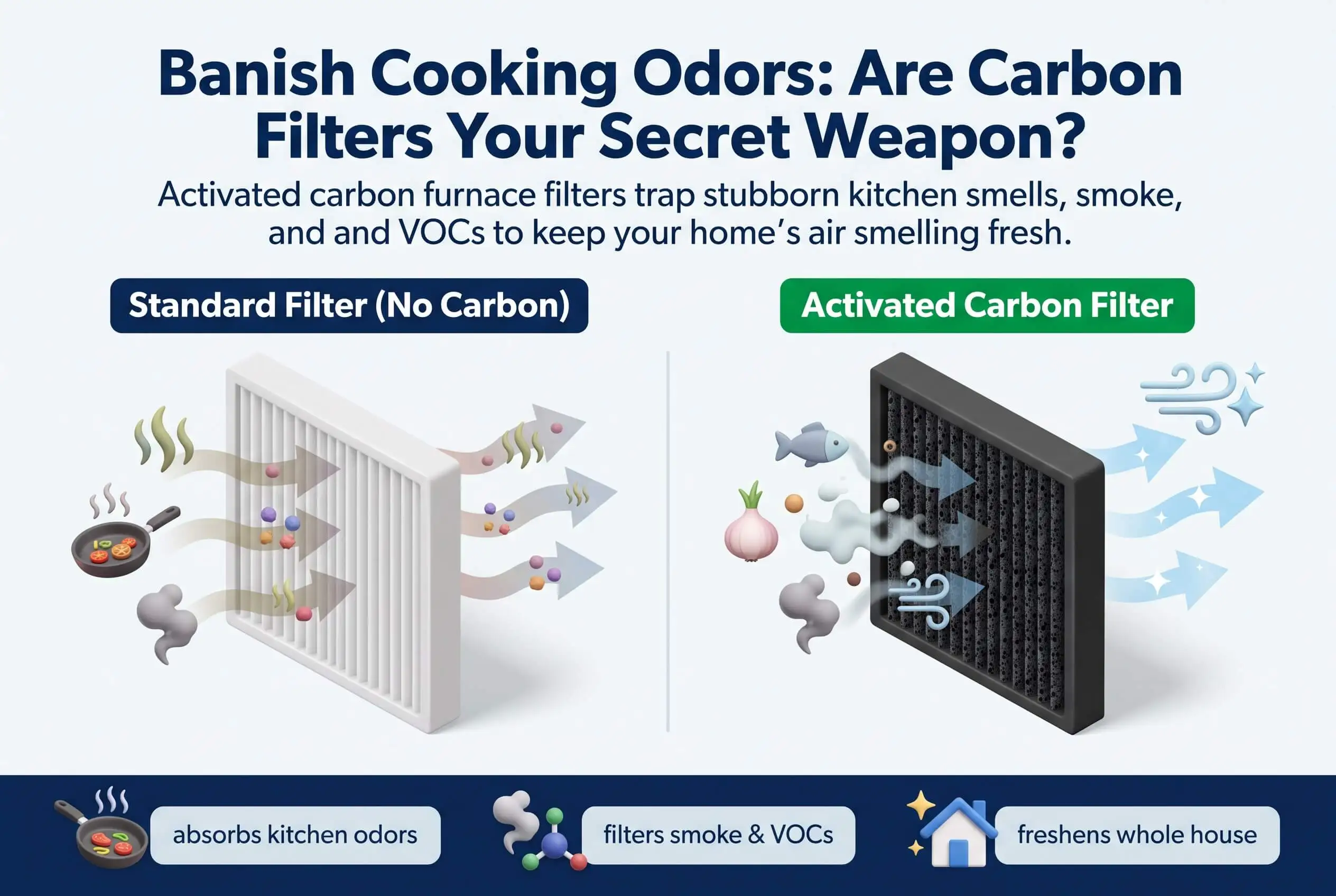
A standard pleated furnace filter is built for particles. Dust and pet dander get caught in its fibers as air pushes through. Odor is a different problem. A smell is a gas, and gas molecules slip right past pleated media.
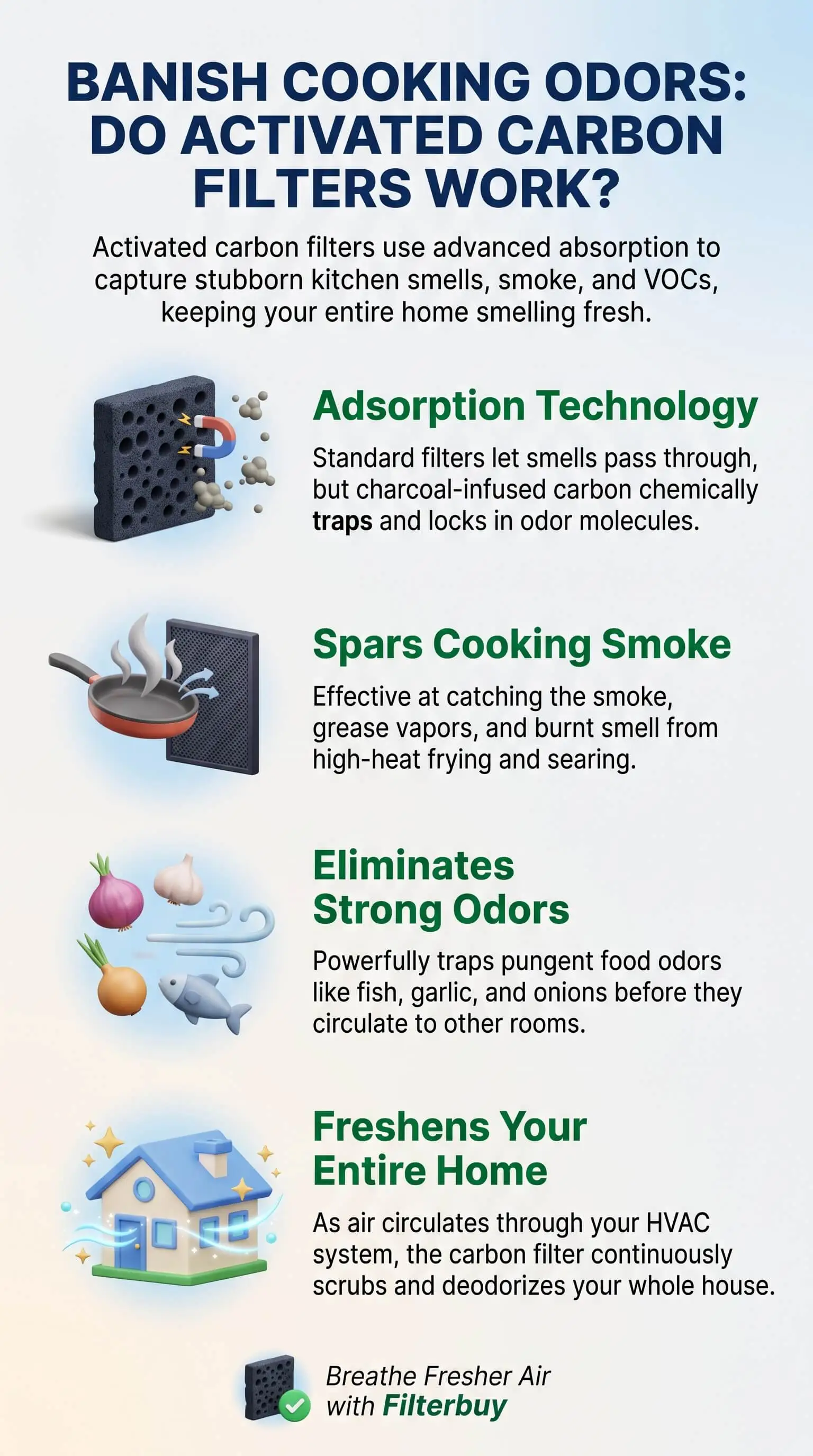
Activated carbon goes after those molecules. Manufacturers process carbon until it's full of microscopic pores, so even a small amount carries a huge internal surface. Odor molecules cling to that surface as air moves through, which is a process called adsorption. A conventional air filter works with fibers alone, and adding an adsorbent like carbon lets it pull odors and gaseous pollutants out of the air as well.
How much carbon you have matters more than anything else. The EPA says carbon filters perform well when they contain a large amount of material, and a 1-inch furnace filter only has room for a thin layer. For the details on how carbon quality gets measured, see Activated Carbon Filter Ratings Explained.
What Cooking Odors Are Actually Made Of
Every cooking smell has two parts, and each one calls for a different kind of filtration.
Gases and VOCs. This is the aroma itself, which food gives off as it browns or scorches. Carbon handles this part.
Grease aerosols and smoke particles. These tiny droplets carry odor and settle into curtains and carpet. Pleated media handles this part.
Searing and frying fatty foods put out the most of both. That's why a filter pairing a carbon layer with pleated media covers more ground than either material alone. On the particle side, the MERV rating chart shows how filter grades compare.
Pro Tip. Grease coats carbon and plugs its pores. The less greasy air that reaches your return vent, the longer your carbon keeps working.
Where Carbon Furnace Filters Help and Where They Fall Short
Where They Help
Smell that drifts through the house hours after dinner, especially in open floor plans where kitchen air reaches the return vent quickly
Kitchens that turn out fish, curry, or garlic-heavy dishes several nights a week
Where They Fall Short
Run time. The EPA points out that an HVAC filter only cleans air while the system is running, and that's often less than a quarter of the heating and cooling season. With the blower off, the carbon just sits there.
Saturation. A thin carbon layer fills up. Once smells start hanging around longer than they used to, the carbon is probably spent.
Combustion gases. Furnace filter carbon isn't designed for carbon monoxide or nitrogen dioxide from gas burners. Ventilation has to handle those.
Timing. By the time odor reaches your furnace filter, it has already traveled through your living room.
The Routine That Clears Kitchen Smells
Work from the stove outward.
Vent first. Switch on a range hood that exhausts outdoors before the pan heats up, and let it run 10 to 15 minutes after you finish.
Cook on the back burners. Berkeley Lab researchers found this can make a hood up to twice as effective at removing pollutants.
Give the hood fresh air. Open a nearby window and crack so the hood has replacement air to pull.
Run the blower. Move your thermostat fan from Auto to On for 30 to 60 minutes after dinner so air actually passes through the carbon.
Watch for breakthroughs. When cooking odors linger noticeably longer than usual, swap in a fresh filter.
How to Choose a Carbon Filter for Cooking Odors
Choose a combination filter. Carbon plus pleated media handles the smell and the grease particles carrying it.
Keep MERV balanced. MERV 8 filter fits most residential systems and filters well without choking airflow.
Go thicker if your system allows it. A 2 to 4 inch filter holds more carbon than a 1-inch version, as long as your filter cabinet accepts it.
Match your size exactly. Copy the dimensions printed on the frame of the filter you have now.
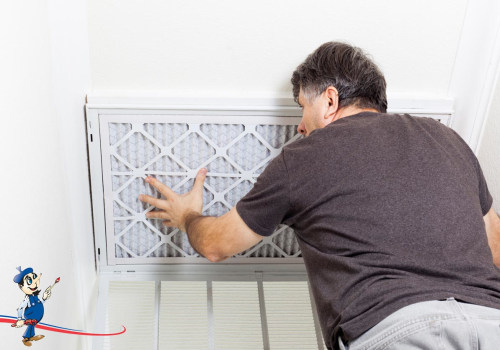
When you're ready to swap, How to Change and Replace Your Furnace Filter covers each step.
“In my experience, the homes with the worst lingering cooking smells usually rely on a recirculating hood and expect the furnace filter to make up the difference. A thin carbon layer can only clean the air your blower actually moves, so venting outdoors and running the fan after dinner will do more than any filter upgrade on its own.”
Essential Resources
Each of these goes deeper on odor control, filtration, or kitchen ventilation.
1. Find the Right Furnace Filter for Your Home
Compare furnace filters by exact size and MERV rating, including options with an activated carbon layer that handle everyday cooking odors.
2. Learn What Home Air Cleaners Can and Can't Do
EPA: Guide to Air Cleaners in the Home. The EPA lays out how particle and gas filtration differ and why source control and ventilation should come before any air cleaner.
3. See Where Air Cleaning Fits in a Healthy Home
American Lung Association: Air Cleaning. The ALA covers activated charcoal for gases and odors and is clear that air cleaning backs up ventilation rather than replacing it.
4. Find Out How Carbon Filters Wear Out
AAFA: Air Cleaners, What You Need to Know. The Asthma and Allergy Foundation of America explains how carbon pores clog over time and why replacement matters.
5. Get the Research Behind Range Hood Performance
U.S. Department of Energy: Kitchen Ventilation Should Be High Performance. Berkeley Lab researcher Brett Singer looks at hood airflow and how much cooking pollution hoods actually capture.
6. Explore Everyday Ways to Cut Cooking Pollutants
Environmental Law Institute: Reducing Exposure to Cooking Pollutants. ELI reviews household habits and vented hoods for both gas and electric cooking.
7. Check What Counts as Kitchen Exhaust
HUD: NSPIRE Kitchen Ventilation Standard. HUD defines kitchen exhaust as air moved to the outside, and recirculating hoods don't qualify.
Supporting Statistics
Range Hoods Capture as Little as 15% of Cooking Pollutants
Lawrence Berkeley National Laboratory researchers tested range hoods and measured capture efficiency anywhere from 15% to 98%. A higher price didn't predict better performance.
Why does it matter to you? A weak hood pushes more odor toward your return vent, and your carbon has to work harder.
Central Ventilation Removed About 5% of Ultrafine Cooking Particles
In a National Institute of Standards and Technology test house, more than 90% of the particles from gas stovetop cooking measured smaller than 10 nanometers. Ventilation removed no more than about 5% of them, whether the central fan ran or not.
Why does it matter to you? Your HVAC system can't clear cooking emissions by itself, so catching them at the stove counts most.
Fatty Foods Drive the Highest Cooking Emissions
A 2026 chamber study published through the National Institutes of Health (PMC) clocked VOC emission rates between 17.8 and 184.0 micrograms per minute across 12 air-fried dishes. High-fat foods release the most ultrafine particles.
Why does it matter to you? Bacon night and fish night will use up carbon faster than a pot of steamed vegetables.
Cooking releases odors, ultrafine particles, and gases that range hoods and central ventilation may not fully remove. While furnace filters and air filters can help capture some airborne particles, controlling emissions at the stove remains the best way to protect indoor air quality.
Final Thoughts and Opinion
I think an activated carbon furnace filter earns its spot in your home, as long as you treat it as the last layer of defense instead of the first. It quietly cleans up the smell that escapes the kitchen. In a house where someone cooks every night, that's a comfort you'll notice.
It won't rescue a kitchen that doesn't vent, though. While the Clean Air Act focuses primarily on outdoor air pollution, keeping indoor air clean also matters. If you change one habit this week, run the range hood every time you cook, then let the carbon in your furnace filter take care of whatever drifts into the bedrooms. You're the one deciding what your family breathes at home, and two small habits make that air noticeably fresher.
Frequently Asked Questions
Do carbon furnace filters get rid of cooking smells completely?
No. They reduce the odor that circulates through your HVAC system, but they can't capture smells at the source. Add an outdoor-vented range hood, and you'll get much closer to an odor-free home.
How often should I replace a carbon furnace filter if I cook every day?
Go by your nose instead of the calendar. Once cooking smells linger noticeably longer than they did right after you installed the filter, the carbon is likely full and ready for a swap.
Is a carbon furnace filter better than a range hood for kitchen odors?
No. A range hood vented outdoors pulls odors and pollutants out before they spread. Your carbon furnace filter works afterward, on air that has already moved through the house. Use both.
Will a carbon filter reduce airflow in my HVAC system?
A combination carbon filter at MERV 8 generally keeps airflow healthy in most homes. Stick with the size and thickness your system calls for, and skip any filter more restrictive than the manufacturer built it to handle.
Should I run my HVAC fan while cooking?
Run it after you cook. Your range hood handles emissions while the burners are on. Then setting the thermostat fan to On for 30 to 60 minutes pushes odor-heavy air through the carbon.
Does a carbon filter help with odor-related breathing irritation?
It can help with gas-based irritants, though particles still need pleated filtration. Do Carbon Air Filters Help With Asthma Triggered By Odors? answers that question in depth.
Clear the Air After Every Meal
Activated carbon furnace filters do their best work on cooking odors when an outdoor-vented range hood handles the stove and the carbon catches whatever drifts into the rest of your home. Start with ventilation, pick a carbon-layer filter in your exact size, and enjoy tonight's dinner without smelling it tomorrow morning.