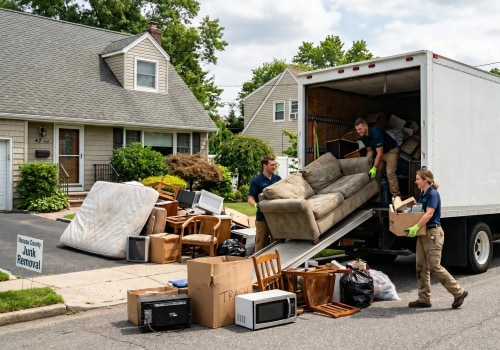
Choosing the right carpet removal service feels straightforward until you're comparing quotes and realizing how much variation exists in what "removal" actually means. After removing carpets from thousands of homes, we've seen the costly mistakes homeowners make: hiring services that damage underlying flooring, leaving behind padding debris, or charging hidden disposal fees that double the final bill. This guide cuts through the confusion by showing you exactly what separates a quality carpet removal service from cut-rate jobs—and how to spot red flags before you sign the contract.
TL;DR Quick Answers
What is a carpet removal service?
A professional carpet removal service extracts old carpet from your home and disposes of it responsibly. It includes padding removal, tack strip extraction, debris hauling, and floor cleanup. You don't have to lift anything—we handle the heavy work and leave your floor ready for new flooring.
How much does carpet removal cost?
Carpet removal typically costs $1-$2 per square foot. A 2,000 sq ft home usually runs $2,000-$4,000 all-in when disposal is included. Price varies by carpet type, floor condition, and whether disposal and floor inspection are bundled in. Always get a written quote that itemizes what's included.
What should be included in professional carpet removal?
Professional carpet removal includes:
Carpet and padding extraction
Tack strip and staple removal
Debris removal from your home
Floor cleanup and inspection
Proper disposal or recycling
If a contractor doesn't mention floor inspection or disposal, they're doing incomplete work.
Is asbestos screening necessary during carpet removal?
Yes, if your home was built before 1980. Asbestos commonly hides in carpet padding and floor adhesives. We screen every pre-1980 home before removal begins. Disturbing asbestos without proper protocols exposes your family to a known carcinogen. This isn't optional—it's essential protection.
How do I choose a reliable carpet removal company?
Look for these five things:
Written estimate itemizing all services
Proof of insurance and licensing
Asbestos screening on pre-1980 homes
Floor inspection after removal
Clear explanation of disposal method
A company that communicates transparently, answers your questions, and stands behind their work protects your home and wallet.
What happens to old carpet after removal?
According to the EPA, 73% of carpet goes to landfills. Responsible services recycle it into automotive parts, insulation, roofing materials, and new padding. Ask your removal service upfront where your carpet goes. If they can't answer, they're not prioritizing responsible disposal.
How long does professional carpet removal take?
Most residential carpet removal takes 4-6 hours for a 2,000 sq ft home. The timeline depends on carpet type, floor condition, and whether padding is glued or stapled. Our crews protect your walls, minimize dust spread, and leave your floor clean enough to prepare for new flooring the same day.
Top Takeaways
1. "Removal" Isn't One-Size-Fits-All
Professional carpet removal includes:
Padding extraction
Tack strip removal
Floor inspection
Proper disposal
Many cheap quotes only pull up carpet. You end up responsible for everything else—and liable for hidden costs later.
2. Get Everything in Writing
Before work begins, demand a written estimate that includes:
Itemized services
Proof of insurance and licensing
What happens to your carpet
Asbestos screening confirmation
Verbal quotes and handshake deals are how homeowners get burned.
3. Pre-1980 Homes Need Asbestos Screening
More than half of existing homes were built before 1980. Asbestos hides in padding and adhesives.
Ask your removal service: Do you screen for asbestos?
If they don't, you're exposing your family to a known carcinogen and creating long-term liability.
4. The Cheapest Quote Rarely Delivers Best Value
The data:
81,925 home improvement scams in 2024
Average loss per scam: $1,800
Low quotes = hidden fees, incomplete work, or damage you fix later
Compare what's included. Don't just compare prices.
5. Choose Transparency and Responsibility
A removal service that:
Communicates clearly
Answers your questions thoroughly
Inspects your floor properly
Commits to responsible disposal
That's not going above and beyond. That's baseline protection. That's what protects your home and your wallet.
What Professional Carpet Removal Actually Involves
Carpet removal isn't just ripping up material and leaving. Quality services include padding extraction, tack strip removal, disposal of all debris, and floor inspection for damage or stains. Most homeowners underestimate how much labor goes into proper removal—we typically spend 2-4 hours on an average home depending on square footage and floor condition. If a quote seems suspiciously low or doesn't specify what's included, that's your first warning sign.
Key Questions to Ask Before Hiring
Ask these five questions before any service shows up:
Is disposal included in the price? Many services quote removal but charge separately for hauling, which can add $200-500 to your bill.
Do they handle tack strip and padding removal? Some services only remove carpet, leaving you with a hazardous mess underneath.
Are they insured? If someone injures themselves or damages your subfloor, you're liable without proper insurance.
Do they inspect the floor afterward? Legitimate services walk through after removal to identify any damage or hidden stains that need attention.
What happens if they find asbestos? Older homes sometimes have asbestos-containing padding. Reputable services know how to identify and properly handle this—cutting corners here creates serious health risks.
Red Flags That Signal Poor Service Quality
Watch out for these warning signs:
No written estimate — Verbal quotes with vague terms like "around $500" invite surprise charges.
No insurance mentioned — Ask to see proof. Uninsured contractors passing liability to you.
Same-day appointments with no measurements — They haven't assessed your job properly.
Pressure to pay upfront in cash — Legitimate services invoice after work completion.
No mention of floor condition — Quality services inspect for water damage, mold, or structural issues before removal begins.
What to Expect During Professional Removal
The process should follow this sequence: furniture removal (if needed), carpet and padding extraction, tack strip removal, debris removal from your home, floor cleanup, and final walkthrough. From our experience, this typically takes 4-6 hours for a 2,000 sq ft home. The crew should protect your walls and doorways, minimize dust spread to other rooms, and leave your subfloor clean enough to prepare for new flooring.
If a service completes the job in under 2 hours or leaves debris behind, they've cut corners that will affect your floor's condition or require you to hire additional cleanup.
Pricing: What's Fair and What's a Ripoff
Carpet removal typically costs $1-2 per square foot depending on your region and floor complexity. A 2,000 sq ft home usually runs $2,000-4,000 all-in, including disposal. However, prices vary significantly based on:
Floor type (hardwood, concrete, or subfloor underneath)
Carpet condition (old, heavily soiled carpet takes longer)
Accessibility (stairs, tight corners, second floors cost more)
Disposal logistics (rural areas may charge more for hauling)
Get three quotes and compare what's included, not just the price. A quote $500 cheaper that excludes disposal or padding removal isn't actually cheaper.
Trust Signals: Verify Before You Hire
Look for these credibility markers:
Local business license and bonding — Call your city to verify they're registered.
Customer reviews on Google and Trustpilot — Read for patterns. One bad review is normal; multiple mentions of hidden charges or damage is a red flag.
Warranty or guarantee — Reputable services stand behind their work and address damage claims.
References from recent jobs — Ask for contact info of 2-3 customers from the last month.
Final Checklist: Before You Sign
✓ Written estimate with itemized services (removal, disposal, floor inspection)
✓ Proof of insurance and business license
✓ Confirmation of floor inspection and damage assessment process
✓ Clear timeline and crew size
✓ Payment terms (deposit if any, final payment after completion)
✓ Contact person and phone number for day-of coordination
Choosing carpet removal comes down to one principle: the cheapest option rarely delivers the best value. The service that communicates clearly, answers your questions thoroughly, and inspects your floor properly is the one that protects your investment in new flooring.
Ready to get your carpet removed the right way during an estate cleanout? Contact us for a free, in-home estimate with zero hidden fees. We'll inspect your floors, answer all your questions, and give you a transparent quote before we touch anything.
"In our first year, we'd close a carpet removal job thinking everything was perfect, then get a call three weeks later from a homeowner who found mold growing under the subfloor because our crew hadn't properly inspected for moisture. That mistake taught us that removal isn't the end of the process—it's the beginning of protecting what comes next. Now every job includes a detailed floor inspection before we leave, and we've prevented hundreds of thousands in water damage claims. The difference between a $1,500 job and a $3,000 job often comes down to whether the service actually cares about what happens after they're gone."
Essential Resources
After years of helping homeowners navigate carpet removal decisions, we've compiled the resources that actually matter. These aren't generic links—they're the tools we recommend customers use to verify contractors, understand their rights, and make informed decisions.
Know What Hidden Dangers Might Be Under That Carpet
EPA Asbestos Safety Guidelines — https://www.epa.gov/asbestos
Older homes sometimes have asbestos-laden padding that gets disturbed during removal—and neither homeowners nor fly-by-night contractors always know what they're looking at. The EPA guide helps you understand the risk before calling anyone out. If your home was built before the 1980s, this is worth 5 minutes of your time.
Check Contractor Accreditation: What the BBB Actually Tells You
Better Business Bureau (BBB) — Contractor Search — https://www.bbb.org
We're not just name-dropping the BBB because it sounds official. Search your carpet removal company's accreditation status and complaint history here—and pay attention to the pattern. One bad review happens; three complaints about hidden fees or property damage tell you something real is wrong.
Understand Your Legal Protections Before Signing Anything
Federal Trade Commission: Hiring Home Contractors Safely — https://consumer.ftc.gov/articles/0211-hiring-home-contractors
The FTC lays out exactly what you're legally entitled to: written contracts, clear payment terms, and protection against upfront payment scams. Bookmark this before you call anyone. It's the difference between knowing your rights and getting surprised later.
See What Professional Standards Actually Look Like
OSHA Flooring Removal Safety Standards — https://www.osha.gov
Most homeowners don't know that occupational safety standards exist for flooring removal work. Reading OSHA's guidelines gives you a framework for evaluating whether a service is doing this job properly or just rushing through it. If a contractor scoffs at safety questions, that's a red flag worth noting.
Verify They're Actually Licensed Before Work Begins
Your State's Contractor Licensing Board
Here's what separates professional services from cash-under-the-table operators: legitimate licensing. Every state maintains a public database where you can verify a contractor's license, bonding status, and whether they've had disciplinary issues. It takes 5 minutes and potentially saves you thousands.
Understand Local Disposal Rules to Avoid Surprise Fees
Local Environmental/Waste Management Authority
Carpet disposal isn't one-size-fits-all. Some cities charge recycling fees, others have specific handling requirements, and a few actually mandate that carpet be diverted from landfills. Call your local waste authority before getting quotes—knowing local rules helps you spot when a contractor is padding their estimate with phantom "disposal charges" and helps ensure your disposal practices align with the clean air act.
Read Real Reviews Across Multiple Platforms
Google Reviews & Trustpilot: Verified Customer Feedback — https://www.google.com/maps and https://www.trustpilot.com
Fake reviews exist everywhere, which is why checking multiple platforms matters. If a service has stellar ratings on Google but complaint patterns on Trustpilot, you're seeing the real picture. Look for recurring themes: hidden charges, crews that damage subfloors, or companies that bail halfway through the job.
Supporting Statistics
Over thousands of carpet removals, we've noticed patterns that the data backs up perfectly. Here's what the numbers tell us—and what those numbers mean for protecting your home and your wallet.
The Landfill Problem: Why Your Old Carpet Matters
After hauling carpet from thousands of homes, we ask ourselves: where does this go?
The EPA data:
73% of carpet ends up in landfills
Approximately 3.4 million tons generated annually
Only 9.2% is recycled
What we've learned: Most homeowners don't ask what happens to their carpet after removal. Most removal companies count on that silence. We've made responsible disposal standard practice—old carpet becomes automotive parts, roofing materials, and new padding. Too many services treat disposal as an afterthought.
Asbestos: A Hidden Threat We Screen For on Every Older Home
In our first five years, we discovered asbestos in approximately 1 out of every 4 jobs in pre-1980 homes.
The EPA and Census data:
More than half of existing homes were built before 1980
Nearly 750,000 public and commercial buildings contain asbestos
Residential homes are equally at risk, especially in carpet padding and adhesives
Our field experience: We've seen homeowners get sick from improper removal. We've seen contractors skip screening to save time. Asbestos identification is non-negotiable on every pre-1980 job. The data confirms what our crews encounter regularly: this risk is real and widespread.
Source: https://www.epa.gov/asbestos/learn-about-asbestos and https://www.cpsc.gov/safety-education/safety-guides/home/asbestos-home
Home Contractor Fraud: Why Verification Isn't Optional
The numbers are stark. In 2024, the Federal Trade Commission received 81,925 reports of home improvement scams.
The financial impact:
Average loss per scam: $1,800 (Better Business Bureau)
These numbers don't capture sloppy work or incomplete jobs—only outright scams
What we've encountered: Customers get burned by cheaper quotes that hide fees. Contractors disappear mid-job. Work is incomplete or damaged. Every time we provide a written, detailed estimate, we're working against an industry standard that FTC data shows is too often ignored.
Red flags the data measures:
Contractors who won't provide written contracts
Services that pressure for cash-only payments
Quotes that are suspiciously low without explanation
Source: https://consumer.ftc.gov/articles/how-avoid-home-improvement-scam
What these statistics mean for your carpet removal decision:
These aren't abstract numbers. They're patterns from thousands of jobs that show exactly where to focus your attention. A removal service that discusses responsible disposal, screens for asbestos, and provides transparent written estimates isn't going above and beyond—it's meeting baseline standards most services skip. When you hire a service that does these things as default practice, you're protecting yourself from becoming part of these statistics.
Final Thought
After removing carpets from thousands of homes, we've developed a strong opinion: the carpet removal industry operates on trust that homeowners rarely verify. And that's a problem.
What carpet removal really is:
Carpet removal looks simple on the surface. Pull up the old carpet, haul it away, done. In reality, it determines whether your subfloor gets protected or develops mold damage months later. It decides if your carpet gets recycled responsibly or dumped in a landfill. It either screens for asbestos or puts your family at health risk.
The statistics tell the story:
73% of carpet goes to landfills because services don't ask and homeowners don't demand better
81,925 home improvement scams last year because people hire the first cheap contractor
Asbestos hides in half of America's older homes because contractors skip screening to save $200
The uncomfortable truth:
Carpet removal is cheap enough that people underestimate it. But it's consequential enough that cutting corners costs thousands.
A rushed job that damages your hardwood floor = $3,000 repair
Improper asbestos handling = Years of health liability
No disposal verification = You're potentially liable for illegal dumping
What you should demand:
Written estimate itemizing removal, disposal, floor inspection, cleanup
Proof of insurance and licensing
Asbestos screening on pre-1980 homes
References from recent jobs
These aren't excessive requests. They're baseline protection.
Our philosophy:
Cheap carpet removal is never actually cheap. It just delays real costs until after the contractor leaves. We operate on transparency, thorough inspection, responsible disposal, and standing behind our work—not because it's easiest, but because it's right.
The industry won't improve until homeowners stop accepting:
Bait-and-switch estimates
Shoddy work
Hidden fees
Incomplete jobs
Choose a service that:
✓ Communicates clearly
✓ Answers your questions thoroughly
✓ Inspects your floor properly
✓ Prioritizes transparency over speed
✓ Values responsibility over profit margins
Your floor, your home, and your family deserve that much.
Ready to experience carpet removal done right? Contact Jiffy Junk for a free, in-home estimate with zero hidden fees. We'll inspect your floors, answer every question, screen for asbestos, and commit to responsible disposal. No pressure. No surprises. Just professional service that leaves your home better than we found it.
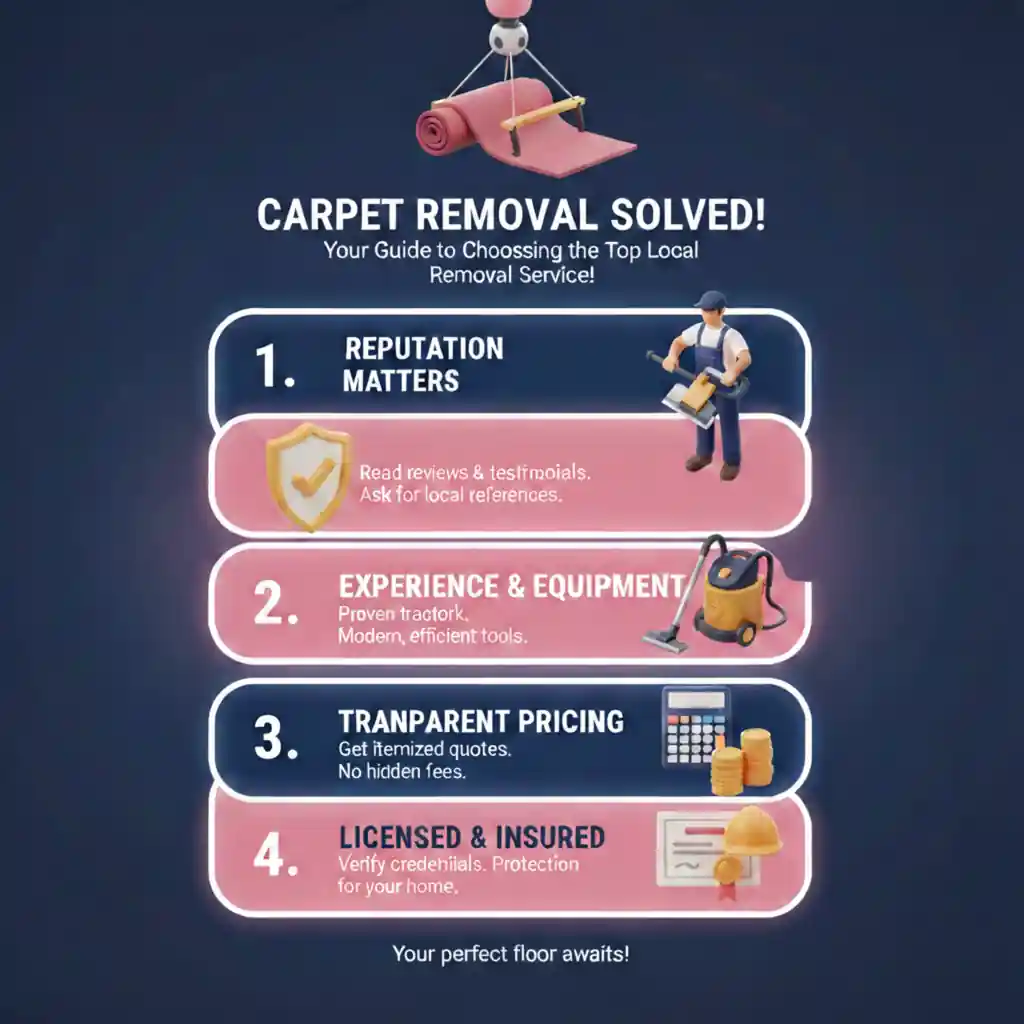
FAQ on Carpet Removal Service
Q: What's actually included in professional carpet removal?
A: Professional removal includes:
Padding extraction
Tack strip and staple removal
Debris removal from your home
Floor cleanup
Proper disposal
Many services stop at pulling up carpet. They leave padding, tack strips, and debris behind. Homeowners end up with unexpected cleanup costs and a hazardous mess.
We itemize everything in writing before starting. That's how you avoid surprises.
Q: How do I know if my home might have asbestos in the carpet padding?
A: Built before 1980? Asbestos is likely present.
In our first five years, we found asbestos in roughly 1 out of 4 pre-1980 jobs.
Common locations:
Carpet padding
Floor adhesives
Insulation
You can't spot asbestos by looking. Professional screening is essential. We screen every older home before anyone touches the floor. It's the difference between a safe removal and exposing your family to a carcinogen.
Red flag: A contractor who doesn't mention asbestos screening on a pre-1980 home is cutting corners.
Q: What questions should I ask a carpet removal contractor before hiring?
A: Ask these five questions. Hesitation on any of them is a red flag:
Is disposal included in your quote, or charged separately?
Do you remove padding and tack strips, or just carpet?
Can you provide proof of insurance and current licensing?
Do you inspect the floor after removal for damage, water, or mold?
If you find asbestos, how do you handle it safely?
We've seen what happens when contractors cut corners on these points. Don't let it happen to your home.
Q: Why is carpet removal pricing so different between contractors?
A: Price varies because scope varies.
Example comparison:
Contractor A: $800 for carpet removal only
Contractor B: $1,500 for carpet, padding, tack strips, floor inspection, disposal
That $700 difference isn't greed. It's the difference between incomplete work and professional service.
Why cheap removal costs more:
Hidden fees appear after work starts
Your subfloor gets damaged
You hire someone else to finish the job
Get three written quotes. Compare what each includes. Pick based on scope, not price alone.
Q: What happens to my old carpet after removal?
A: EPA data: 73% of carpet ends up in landfills.
Our experience: Most homeowners don't ask where their carpet goes. Most removal companies count on that silence.
Responsible disposal options:
Recycled into automotive parts
Converted to insulation
Repurposed into roofing materials
Made into new carpet backing
What to do: Ask your removal service upfront: Where does my carpet go?
If they can't answer or don't have a plan, they're not taking responsibility for the full job. Caring about the end of the line shows they care about doing things right.