This guide shows you how to estimate dumpster rental prices before you book. You’ll learn how to match the right size to your project, estimate weight realistically, and factor in rental time and common add-on fees, so you can compare quotes correctly and avoid overpaying.
TL;DR Quick Answers
Dumpster rental prices
Dumpster rental prices typically range from $250–$600, depending on dumpster size, debris weight, rental length, and local disposal fees.
At Jiffy Junk, we see the biggest price surprises come from weight limits. Heavy debris from remodels like tile, drywall, flooring, and roofing materials can exceed included tonnage fast and trigger overage charges, so always confirm the weight allowance before booking.
Top Takeaways
Estimate cost using weight and disposal fees, not just dumpster size.
Most surprises happen after pickup when the load is weighed.
Heavy remodel debris raises costs fast and can exceed weight limits.
Confirm rental period and fee rules upfront to avoid add-ons.
Best value comes from clear terms on weight allowance and overage fees.
Quick Cost Range for Dumpster Rentals
Most dumpster rentals for home projects fall between $250 and $600, but the final price depends on a few predictable factors. At Jiffy Junk, we’ve found that the most accurate estimates come from calculating two things upfront: how much space your debris takes up and how heavy it will be once loaded.
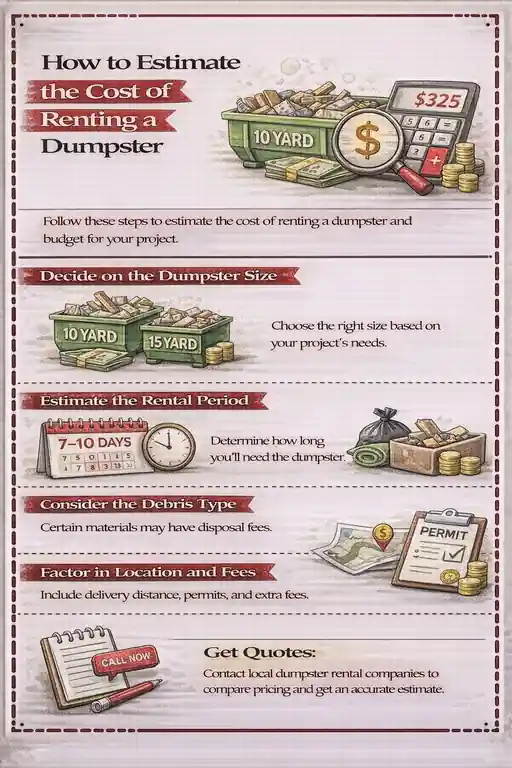
Step 1: Choose the Right Dumpster Size for Your Project
Dumpster size is the starting point for pricing. A larger dumpster typically costs more, but renting too small can also raise your total if you need a second haul.
Common sizes used for home projects:
10-yard for small cleanouts and light debris
15-yard for medium cleanouts or small remodels
20-yard for larger cleanouts or renovation debris
If your project includes bulky items like furniture or cabinets, size up to avoid overflow or extra pickups.
Step 2: Estimate Your Debris Volume
A simple way to estimate volume is to think about pickup truck loads.
General rule of thumb:
10-yard dumpster holds about 3 to 5 pickup truck loads
15-yard dumpster holds about 4 to 6 pickup truck loads
20-yard dumpster holds about 6 to 8 pickup truck loads
If you are close to the top end, a larger dumpster is often cheaper than renting twice.
Step 3: Estimate Debris Weight to Avoid Overage Fees
Weight is the most common reason dumpster estimates fall apart. Most rentals include a weight allowance. If you exceed it, overage charges apply.
Light debris examples:
household junk
cardboard
yard waste
Heavy debris examples:
tile
drywall
flooring
plaster
roofing shingles
dirt and concrete
At Jiffy Junk, we often see “small” remodel projects cost more than expected because heavy materials exceed weight limits faster than homeowners expect.
Step 4: Factor in Rental Length
Many dumpster rentals include a standard rental period, often around 7 to 10 days. Keeping the dumpster longer may add daily extension fees.
To estimate accurately, confirm:
included rental days
extension cost per day
early pickup options
If your project timeline is uncertain, choose a rental with flexible pickup scheduling.
Step 5: Account for Local Disposal Fees
Disposal costs vary by city and county. That is why the same dumpster size can cost more in one area than another.
Local factors that affect pricing:
landfill tipping fees
distance to disposal sites
local regulations
special handling requirements
This is also why national averages help for budgeting, but local quotes will always be more accurate.
Step 6: Watch for Common Extra Fees
When estimating cost, include the fees that most often raise the final bill:
overweight fees
extra-day rental fees
restricted item fees
trip fees for blocked pickup or overfilled dumpsters
permit fees for street placement
The best way to avoid surprise charges is to request a quote that clearly lists what is included.
A Simple Way to Estimate Dumpster Rental Cost
To get a realistic estimate, use this simple formula:
pick the dumpster size based on debris volume
identify whether your debris is light or heavy
confirm weight allowance and overage rates
confirm rental length and extension fees
confirm local disposal costs and restrictions
If you do these five steps, you can compare quotes fairly and avoid most pricing surprises.
Final Takeaway
Estimating dumpster rental cost is not guesswork. The final price is driven by size, debris volume, debris weight, rental length, and local disposal fees. When you estimate those factors upfront, you can book with confidence, avoid overage charges, and stay on budget.
“From what we see every day at Jiffy Junk, the most accurate dumpster cost estimates come from thinking beyond the dumpster size. For a garage cleanout, the real number is usually decided by two things homeowners underestimate: how heavy the debris is and what local disposal fees are in that area. When you estimate weight and ask about the included tonnage upfront, you can avoid the surprise overage charges that turn a ‘cheap’ quote into a higher final bill.”
Essential Resources
Dumpster rental prices can look simple on the surface, but the real cost is usually shaped by the details. These resources help you compare quotes fairly, understand disposal fees, and avoid the surprises we see homeowners run into most often.
1) See Average Dumpster Rental Prices by State Before You Book
This state-by-state cost guide gives you a quick pricing baseline, so you can tell whether your quote is in a normal range or overpriced.
https://www.hometowndumpsterrental.com/blog/the-big-list-of-dumpster-rental-costs-in-all-50-states
2) Check Real Local Disposal Fees That Drive Pricing
Disposal fees are one of the biggest reasons dumpster rental prices vary by city. This official county fee schedule shows what facilities actually charge by weight and material.
https://www.miamidade.gov/global/solidwaste/disposal-fees.page
3) Understand the Biggest Cost Drivers Like Weight Limits and Overage Fees
This guide breaks down what impacts pricing most, including dumpster size, included weight, rental length, and the add-on fees that raise the final bill.
https://wastedoor.com/article/dumpster-rental-cost-guide
4) Review City Solid Waste Rules That Can Affect Your Rental
Local rules matter. City solid waste resources help you understand bulky item policies, pickup regulations, and disposal requirements that can influence what you pay.
https://www.miami.gov/My-Government/Departments/Solid-Waste
5) Use State Solid Waste Resources to Understand Disposal Rules in Your Area
State environmental resources help you find disposal facilities and understand local restrictions, which is important if your project includes special materials.
https://floridadep.gov/waste/permitting-compliance-assistance/content/solid-waste-section
6) Use Consumer Pricing Data to Budget Before You Request Quotes
This consumer pricing guide provides typical dumpster rental cost ranges and explains the factors that change pricing so you can estimate your total upfront.
https://homeguide.com/costs/dumpster-rental-prices
7) Estimate Pricing by Dumpster Size and Rental Length
This cost breakdown shows how dumpster pricing changes based on size and how long you keep it, helping you plan a more accurate budget.
https://www.fixr.com/costs/dumpster-rental
These essential resources help you understand the real cost drivers behind dumpster rental prices and compare them against a junk removal service, so you can budget accurately, evaluate quotes fairly, and avoid unexpected disposal fees.
Supporting Statistics
At Jiffy Junk, we see dumpster rental prices change most due to waste volume, debris type, and local disposal fees. The stats below show why.
1) The U.S. generates massive waste volume
292.4 million tons of municipal solid waste in 2018
About 4.9 pounds per person per day
Why it matters: More waste increases demand on hauling and disposal systems, which can raise local pricing.
Source: https://www.epa.gov/facts-and-figures-about-materials-waste-and-recycling/national-overview-facts-and-figures-materials
2) Remodel debris is heavier than most people expect
600 million tons of construction and demolition debris generated in 2018
Why it matters: Heavy debris pushes loads over weight limits fast, which can increase the final bill.
Source: https://www.epa.gov/facts-and-figures-about-materials-waste-and-recycling/construction-and-demolition-debris-material
3) Demolition debris dominates
90%+ of construction and demolition debris comes from demolition
Just under 145 million tons went to landfills in 2018
Why it matters: Tear-outs create dense loads and disposal rules can change by material.
Source: https://www.epa.gov/smm/sustainable-management-construction-and-demolition-materials
4) Disposal costs vary by region
Average tipping fee in 2023: $56.80 per ton
Northeast average: $84.44 per ton
Why it matters: Higher tipping fees often mean higher dumpster rental prices and higher overweight charges.
Source: https://erefdn.org/analyzing-municipal-solid-waste-landfill-tipping-fees/
These supporting statistics show why dumpster rental prices vary so widely by debris weight and local disposal fees, and how regulations tied to the Clean Air Act can also influence demolition and disposal requirements that affect overall costs.
Final Thought
Estimating dumpster rental cost does not have to be guesswork. Pricing becomes predictable when you focus on the factors that actually drive the final total.
What usually determines the final cost
Dumpster size
Debris volume
Debris weight
Rental length
Local disposal fees
Our real-world takeaway
At Jiffy Junk, we see the biggest mistake is treating dumpster pricing like a flat rate.
In reality, the final price is often decided after pickup when:
the load is weighed
disposal fees are applied
Light cleanouts often stay affordable. Small remodel jobs can cost more than expected because debris is heavy.
Our opinion
The smartest way to stay on budget is to estimate like disposal companies do.
Before booking, confirm:
included weight allowance
overage fees
special handling rules for certain materials
Bottom line: The best dumpster rental is not the cheapest quote. It is the one with the clearest rules and the most predictable final total.
FAQ on Dumpster Rental Prices
Q: What do dumpster rental prices usually cost?
A: Most rentals cost $250–$600. The final price depends mainly on weight limits and local disposal fees.
Q: What is the best way to estimate dumpster rental cost?
A: Start with dumpster size. Then estimate debris volume and weight. Weight is the most common reason estimates change.
Q: What debris raises dumpster rental prices the fastest?
A: Heavy debris like tile, drywall, flooring, plaster, roofing materials, dirt, and concrete. These loads exceed weight allowances quickly.
Q: What fees should I confirm before booking?
A: Ask about overweight fees, extra-day rental fees, restricted item fees, trip fees, and permit fees for street placement.
Q: Why do quotes vary for the same dumpster size?
A: Quotes vary due to different weight allowances, rental periods, disposal terms, delivery distance, and local landfill fees.