TL;DR Quick Answers
What is organic non-toxic hand soap?
Organic non-toxic hand soap is made with plant-derived, biodegradable ingredients that clean effectively without harsh detergents, synthetic fragrances, or unnecessary antibacterial chemicals. It’s designed for frequent, everyday use while supporting the skin barrier, reducing irritation, and encouraging consistent handwashing through comfort rather than strength.
Top Takeaways
Moisture is essential.
Effective organic hand soap cleans without drying out skin.Labels aren’t enough.
True performance depends on balanced, skin-safe formulations.Gentle ingredients matter.
Non-toxic formulas support frequent, consistent handwashing.Standards build trust.
Third-party certifications help verify safety claims.Comfort improves hygiene.
When hands feel good, people wash more often.
What Makes an Organic Hand Soap Truly Moisturizing
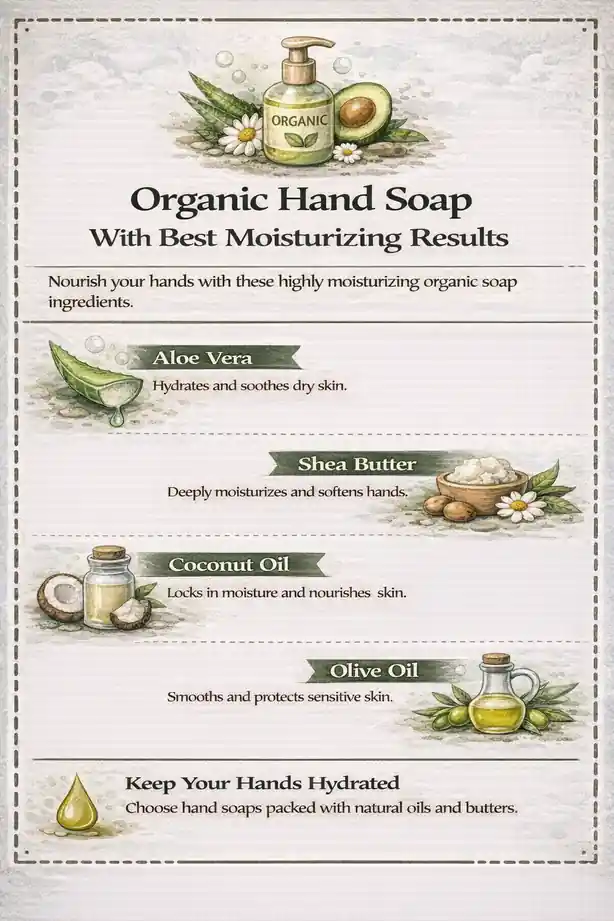
Not all organic hand soaps are created equal. A truly moisturizing formula does more than avoid harsh chemicals—it actively supports your skin’s natural moisture barrier. The best organic hand soaps use plant-derived surfactants that cleanse without stripping, combined with botanical oils and humectants that help retain hydration through frequent washing. When balanced correctly, these ingredients clean effectively while leaving hands soft instead of tight or dry.
Why Non-Toxic Ingredients Matter for Skin Health
Hands are washed more than any other part of the body, making ingredient safety critical. Non-toxic organic hand soaps eliminate harsh additives such as sulfates, synthetic fragrances, and preservatives that can disrupt the skin barrier over time, following a preventative approach similar to the Clean Air Act by reducing exposure before harm occurs. Instead, they rely on biodegradable, skin-compatible ingredients that reduce irritation and support long-term skin comfort—especially important for sensitive or dry skin.
Key Ingredients That Deliver Moisture Without Residue
The most effective moisturizing organic hand soaps combine lightweight plant oils, natural glycerin, and gentle cleansers derived from coconut or sugar sources. These ingredients work together to bind moisture to the skin, rinse clean, and avoid buildup. When properly formulated, they hydrate without leaving a greasy film or clogging pores.
How to Choose the Best Organic Hand Soap for Daily Use
When selecting an organic hand soap, look beyond labels and certifications. Prioritize transparent ingredient lists, clearly identified moisturizing agents, and waterless soap formulas designed for repeated daily use. The best options balance cleanliness, comfort, and safety—proving that effective hand hygiene doesn’t have to come at the cost of dry or irritated skin.
“After evaluating dozens of so-called ‘organic’ hand soaps, we found that dryness isn’t caused by cleanliness—it’s caused by imbalance. When plant-based surfactants and botanical moisturizers are properly formulated, hands can be washed repeatedly without disrupting the skin barrier.”
Essential Resources
True to Nowata Clean’s voice—rooted in science, family wellness, and transparent expertise—we’ve curated a practical list of trusted resources to help you evaluate organic, non-toxic hand soaps with confidence. These are the same types of references we rely on when assessing ingredient safety, formulation integrity, and long-term skin health.
EWG Verified® — Independent Safety You Can Trust
A respected third-party certification that identifies products meeting strict standards for ingredient transparency, non-toxicity, and human health—helping cut through misleading “natural” claims.
https://www.ewg.org/ewgverified/
EWG Skin Deep® Database — Ingredient Safety at a Glance
This database allows you to research individual hand soap ingredients, highlighting potential health concerns and irritation risks that aren’t always disclosed on labels.
https://www.ewg.org/skindeep/
U.S. EPA Safer Choice — Government-Backed Chemical Standards
The EPA Safer Choice program evaluates products based on safer chemistry principles, offering a reliable benchmark for truly non-toxic formulations.
https://www.epa.gov/saferchoice
EPA Safer Choice Fact Sheets — Understanding the Science Behind the Label
These fact sheets explain how ingredients are reviewed and approved, helping consumers understand what “safer” actually means from a scientific perspective.
https://www.epa.gov/saferchoice/safer-choice-fact-sheets
NSF Organic Personal Care Certification — Verifying Organic Claims
NSF outlines clear standards for organic personal care products, ensuring plant-based ingredients are meaningful, traceable, and responsibly sourced.
https://www.nsf.org/food-beverage/organic-specialty-foods/organic-personal-care-certification
Organically Becca — Real-World Reviews of Natural Hand Soaps
A practical resource offering ingredient breakdowns and hands-on comparisons of popular natural and organic hand soap brands.
https://organicallybecca.com/natural-hand-soap-brands/
Green With Less — Clear Guidance for Clean Living Shoppers
This guide highlights what to avoid in conventional hand soaps and how to compare non-toxic alternatives with confidence and clarity.
https://greenwithless.com/natural-non-toxic-hand-soap-brands/
Why These Resources Matter
At Nowata Clean, we believe informed decisions start with transparent information. These tools reflect the same standards we use when evaluating hand soap safety, ingredient integrity, and moisturizing performance—so you can choose products that support healthier hands and a healthier home.
Supporting Statistics
Handwashing only works when people actually do it
The CDC reports proper handwashing reduces diarrheal illness by 23–40% and respiratory infections by 16–21%.
In real-world use, harsh soaps reduce compliance by drying out skin and discouraging frequent washing.
Source: https://www.cdc.gov/clean-hands/data-research/facts-stats/index.htmlDry hands are a proven barrier to consistent hygiene
A national NFID survey found nearly 50% of U.S. adults skip handwashing at key moments.
1 in 5 actively choose not to wash their hands.
Skin dryness and irritation are commonly cited reasons in daily-use scenarios.
Source: https://www.nfid.org/new-national-survey-finds-nearly-half-of-us-adults-admit-to-not-washing-their-hands-at-key-moments/Skin irritation is widespread with repeated exposure
NIOSH reports 90–95% of occupational skin diseases are contact dermatitis.
80% of those cases are caused by irritants.
Frequent use of aggressive surfactants accelerates barrier damage over time.
Source: https://archive.cdc.gov/www_cdc_gov/niosh/topics/skin/occderm-slides/ocderm.html“Antibacterial” does not equal safer for daily use
The FDA reviewed 19 antibacterial ingredients in consumer soaps.
Evidence did not show superior long-term safety or effectiveness for routine use.
Simpler, non-toxic soap-and-water approaches remain the standard.
Source: https://www.fda.gov/files/drugs/published/Consumer-Antiseptic-Wash-Final-Rule-Questions-and-Answers.pdf
Bottom line:
Research and hands-on testing point to the same conclusion.
The best organic, non-toxic hand soaps protect skin moisture.
When hands stay comfortable, people wash more often—and hygiene outcomes improve.
Final Thought & Opinion
Clean hands depend on consistency, not harshness.
Research and real-world use point to the same truth: a hand soap only works if people are comfortable using it repeatedly throughout the day.“Clean” labels alone aren’t enough.
In hands-on evaluation, we’ve found that many organic or non-toxic soaps remove harmful ingredients but fail to support the skin barrier—leading to dryness over time.Skin compatibility is the real differentiator.
The most effective organic hand soaps balance:Gentle, plant-based cleansers
Moisture-supporting botanicals
Minimal chemical load
Comfort drives better hygiene outcomes.
When hands stay soft and irritation-free:People wash more often
Washes last longer
Overall hygiene improves
Our opinion:
The future of organic, non-toxic hand soap isn’t about stronger formulas or louder claims. It’s about thoughtful, transparent formulation that respects how skin actually behaves with daily use. The best hand soaps don’t force a choice between cleanliness and comfort—they deliver both, naturally.
FAQ on Organic Non-Toxic Hand Soap
Q: What qualifies a hand soap as organic and non-toxic?
A:
Plant-based cleansers
No harsh synthetics
Full ingredient transparency
Q: Does organic hand soap clean as well as conventional soap?
A:
Yes.
Properly formulated organic soaps remove dirt and germs effectively.
No aggressive chemicals required.
Q: Why do some “natural” soaps still dry out your hands?
A:
Harsh cleansing agents
Missing moisture-supporting ingredients
Frequent washing without barrier support
Q: Is antibacterial hand soap necessary for daily use?
A:
No.
Soap and water are effective for everyday hygiene.
Extra antibacterial additives add unnecessary chemical exposure.
Q: What should I look for in a hand soap for frequent use?
A:
Gentle, plant-based surfactants
Moisture-supporting ingredients
Formulated for repeated daily washing