TL;DR Quick Answers
What's the air quality like in Milwaukee?
Milwaukee's outdoor air quality shifts with the seasons. Lake winds off Lake Michigan usually keep ozone and particulate levels moderate, but summer heat and the occasional wildfire smoke event can push it higher. Indoors, HVAC upkeep like clean filters and sealed ducts often affects the air you breathe more than that outdoor number does.
Outdoor air quality: Shifts with the seasons and wind direction off Lake Michigan.
Biggest seasonal risk: Summer ozone and occasional wildfire smoke.
Indoor air factor: Filter condition and duct integrity shape what you actually breathe at home.
Best habit: Check current conditions before deciding whether to open windows or rely on filtration.
Top Takeaways
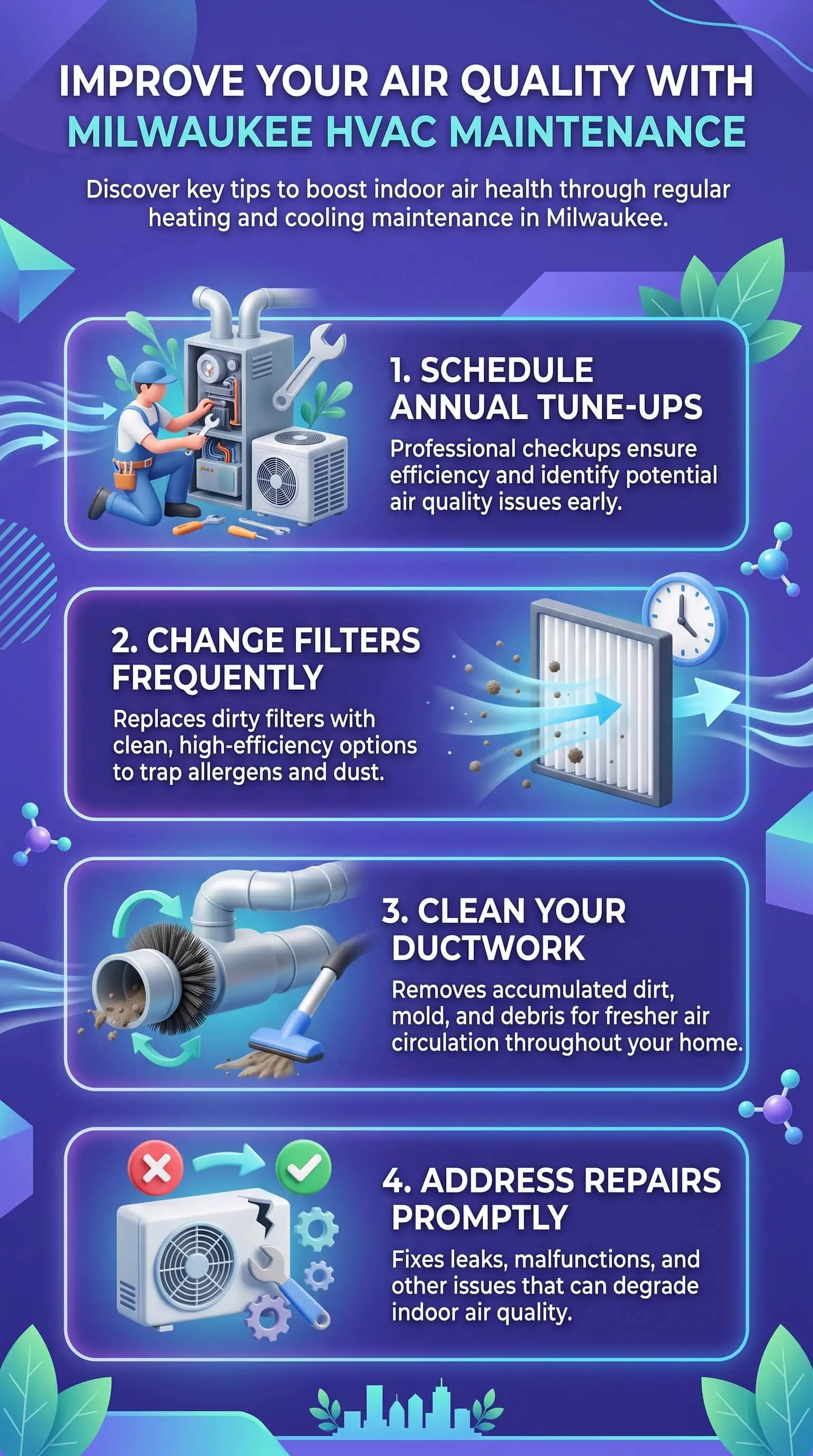
Change filters on a schedule, not by guesswork. Check monthly during heavy-use seasons and replace every one to three months depending on condition.
Have ducts inspected every few years, sooner in homes built before 1960, since leaky or dirty ductwork drives poor indoor air more than most people assume.
Keep vents and returns clear so airflow stays balanced and the system doesn't strain unnecessarily.
Schedule seasonal tune-ups in spring for cooling and fall for heating, before Milwaukee's temperature swings hit their extremes.
Check current outdoor air quality before deciding whether to ventilate with open windows or rely on indoor filtration.
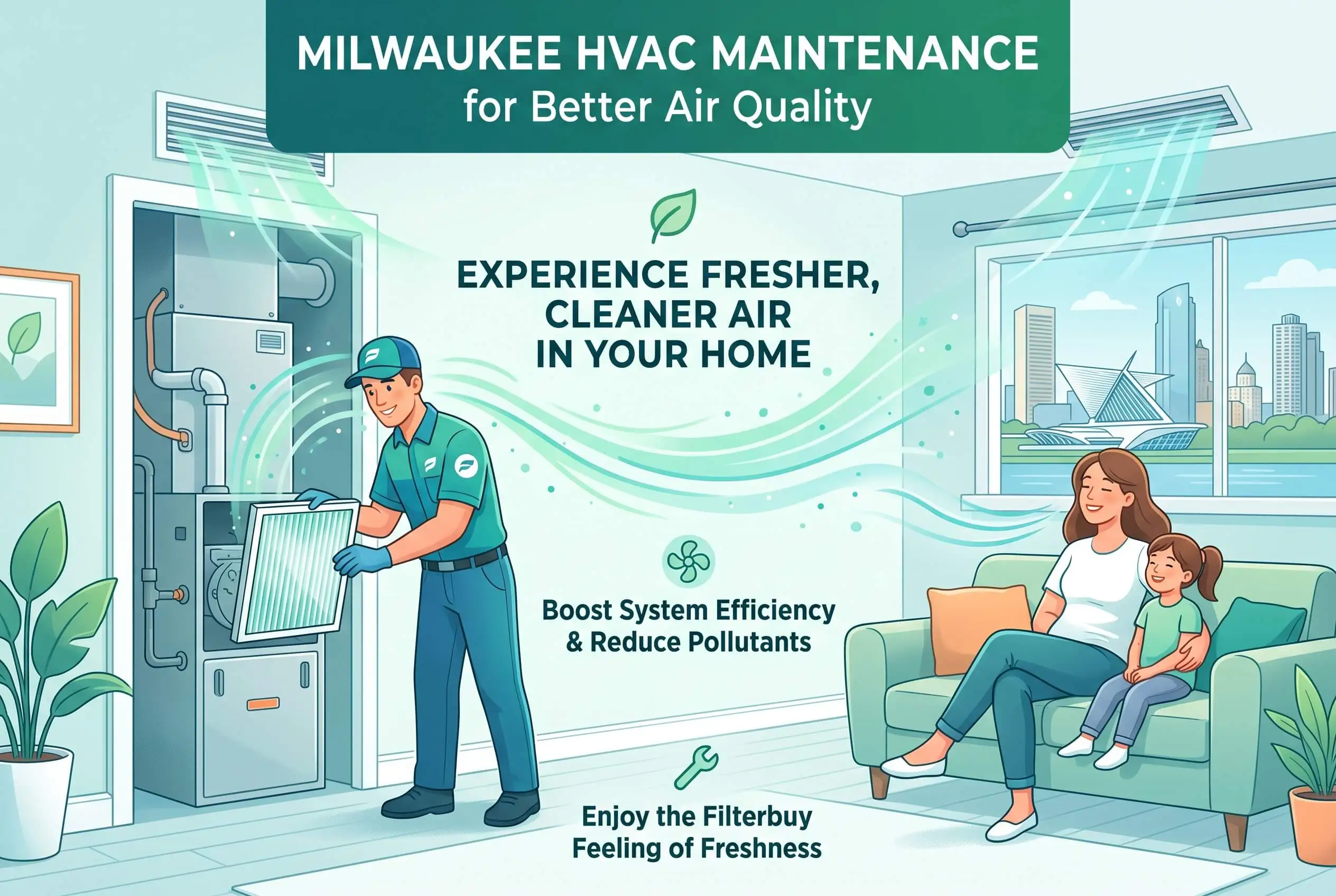
Milwaukee's climate puts real stress on a home's HVAC system. Winters push furnaces to run for months at a stretch. Humid summers ask the air conditioner to do double duty pulling moisture out of the air. Both extremes load up filters faster than a mild-climate home would ever see, and both make airflow balance more important than most people expect.
Filtration is the first line of defense. A high quality filter traps more airborne particles, helping improve indoor air quality while supporting efficient HVAC performance. A dirty filter restricts airflow, forces the system to work harder, and lets dust and allergens recirculate instead of trapping them. I check mine monthly during the heating and cooling seasons and change it every one to three months depending on how it looks, sooner if I've been running the system nonstop through a cold snap.
Duct condition matters just as much, especially in Milwaukee's older housing stock. Leaky or poorly sealed ducts pull unconditioned attic or basement air into the system, dragging in dust, moisture, and sometimes mold spores. If nobody has inspected a home's ducts in several years, that's usually the first place I look, before I blame the filter.
Airflow balance rounds it out. Blocked vents, closed registers, and furniture pushed up against returns all force the system to strain, which shortens filter life and stresses the equipment. Keeping vents clear and having a technician check static pressure during a seasonal tune-up goes a long way toward even, clean airflow room to room.
None of this happens in a vacuum. Outdoor conditions still shape what comes into the system through fresh air intake and open windows. It helps to know what's happening outside before deciding how hard to run the HVAC system on a given day. I keep a bookmark to a live air quality index tool for Milwaukee, so I can check current conditions before deciding whether to open windows or rely on filtration alone.
In my own experience maintaining HVAC systems across Milwaukee's older neighborhoods, the homes with the worst indoor air complaints almost always trace back to a duct system nobody has inspected in five-plus years, not to anything happening outdoors.
7 Essential Resources
1. Check Milwaukee's Real-Time Air Quality Trends
AirNow.gov's Milwaukee AQI trends tool tracks current and recent air quality conditions specific to the Milwaukee area.
2. Understand the Basics of Indoor Air Quality
The EPA's introduction to indoor air quality breaks down how ventilation, filtration, and pollutant sources interact indoors.
3. Follow a Seasonal HVAC Maintenance Checklist
ENERGY STAR's heating and cooling maintenance checklist lays out what a contractor should cover during a seasonal tune-up.
4. Learn Why Ventilation Affects Respiratory Health
The CDC's guidance on ventilation explains how air exchange rates influence indoor air quality and respiratory health.
5. Get a Homeowner's Guide to Duct Cleaning
NADCA's homeowner guide to air duct cleaning outlines what to expect from a professional duct cleaning and how to evaluate a contractor.
6. Verify a Wisconsin HVAC Contractor's Credentials
The Wisconsin DSPS HVAC Contractor page explains state credentialing requirements for anyone working on a Wisconsin HVAC system.
7. Track Milwaukee's Seasonal Climate Patterns
NWS Milwaukee/Sullivan's climate normals and records show just how much temperature and humidity swing across a Milwaukee year, which is exactly what drives HVAC workload.
These trusted resources help Milwaukee homeowners understand indoor air quality, HVAC maintenance, ventilation, duct cleaning, and seasonal system performance, while also highlighting how the Clean Air Act has helped improve outdoor air quality and supports healthier air both inside and outside the home.
3 Statistics
Milwaukee's housing stock skews old. More than 42% of the city's homes date to before 1940, according to the City of Milwaukee's citywide housing plan, and older construction often means original or poorly sealed ductwork still in service today.
Space heating accounted for 42% of residential energy consumption nationally in 2020, according to the U.S. Energy Information Administration, which explains why a Milwaukee winter puts more strain on filters and ductwork than most other systems in a home.
Nationally, the share of occupied homes reporting a winter heating equipment breakdown dropped by 5.8 percent between 1973 and 2019, according to HUD's American Housing Survey research, a trend that tracks with wider adoption of routine seasonal maintenance.
These statistics show how Milwaukee's older housing stock, heavy winter heating demands, and the value of routine HVAC maintenance all influence indoor air quality, making pleated furnace filters an important part of reducing airborne particles and supporting cleaner air inside the home.
Final Thoughts and Opinion
Milwaukee homeowners spend a lot of energy watching the outdoor air quality index and not nearly enough time thinking about the system pulling that air through their home. Both matter. Neither one replaces the other. My honest opinion, after years in the field, is that a monthly filter check and an annual duct inspection prevent more indoor air problems than any single upgrade or gadget could. MERV 13 filters can also help capture finer airborne particles that may enter your home during periods of poor outdoor air quality. Pair that habit with an eye on current outdoor conditions, and you've covered most of what actually affects the air inside a Milwaukee home.
Frequently Asked Questions
How often should I change my HVAC filter in Milwaukee?
Check it monthly during winter heating and summer cooling seasons, and plan to replace it every one to three months. Choosing top air filters that match your HVAC system can help improve filtration performance. Homes running the system nearly year-round, or with pets, may need more frequent changes.
Does duct cleaning actually improve indoor air quality?
Yes, particularly in older homes. Ducts nobody has cleaned or inspected in years can recirculate dust, allergens, and sometimes mold spores every time the system runs.
Why does Milwaukee's climate affect HVAC maintenance more than milder climates?
Long heating seasons and humid summers push both the furnace and air conditioner harder than a moderate climate would. That shortens filter life and puts more demand on ductwork and airflow balance.
Should I rely on outdoor air quality reports before opening my windows?
That's a reasonable habit. Checking current conditions before ventilating with outdoor air helps you decide whether opening windows or relying on indoor filtration makes more sense on a given day.
CTA
A clean filter and a healthy duct system do more for indoor air than most people expect. Indoor air quality testing can also help identify pollutants or ventilation issues that may affect the air inside your home. Take a look at current outdoor air conditions in your area to decide how to balance ventilation and filtration today.