We went through the CDC data, outbreak reports, and transmission science to better understand norovirus Disney World. The encouraging takeaway is that visiting Disney World does not automatically mean a high risk of getting sick, especially when guests follow simple hygiene habits. Norovirus can spread anywhere, but the exposure patterns in a theme park are different from those on a cruise ship, and understanding those differences can help visitors feel more prepared. Here’s what we found, along with the practical steps that can meaningfully reduce your risk during a park day.
TL;DR Quick Answers
norovirus disney world
No confirmed norovirus outbreak has been tied to a specific Disney World ride. The recent norovirus headlines connected to Disney trace back to Disney Cruise Line ships, not the Orlando parks, and the two environments don't carry the same exposure risk.
Ride queues and ride vehicles: no documented outbreak, but the same high-touch-surface risk as any crowded attraction
Cruise ships: where the actual recent reports originated, not the theme parks
Best protection: soap and water before eating and after rides, plus a rinse-free norovirus-targeted soap for moments a sink isn't around
Top Takeaways
No confirmed outbreak has been tied to a specific Disney World ride. The recent news traces back to Disney Cruise Line ships.
Norovirus needs only a small number of particles to cause infection, and it survives on hard surfaces for days at a time.
Soap works by physically lifting germs and grease off skin so water can rinse them away, a different mechanism than chemical disinfection. Wikipedia's overview of soap covers how that cleaning action actually works.
Hand sanitizer helps as a backup against norovirus, but it was never built to replace soap and water for this particular virus.
High-touch surfaces at any crowded attraction carry similar baseline risk. Disney isn't a special case here.
How norovirus actually spreads
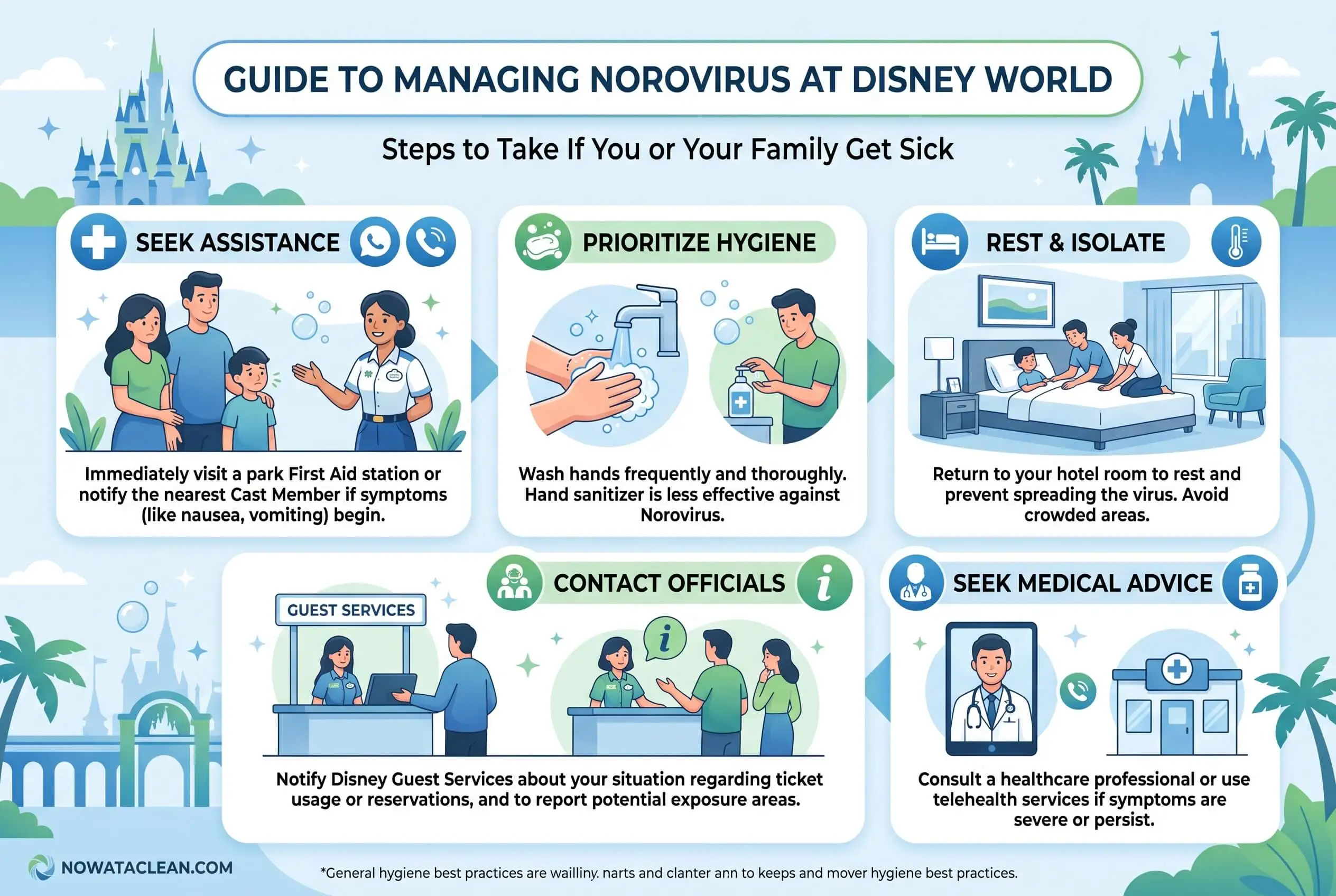
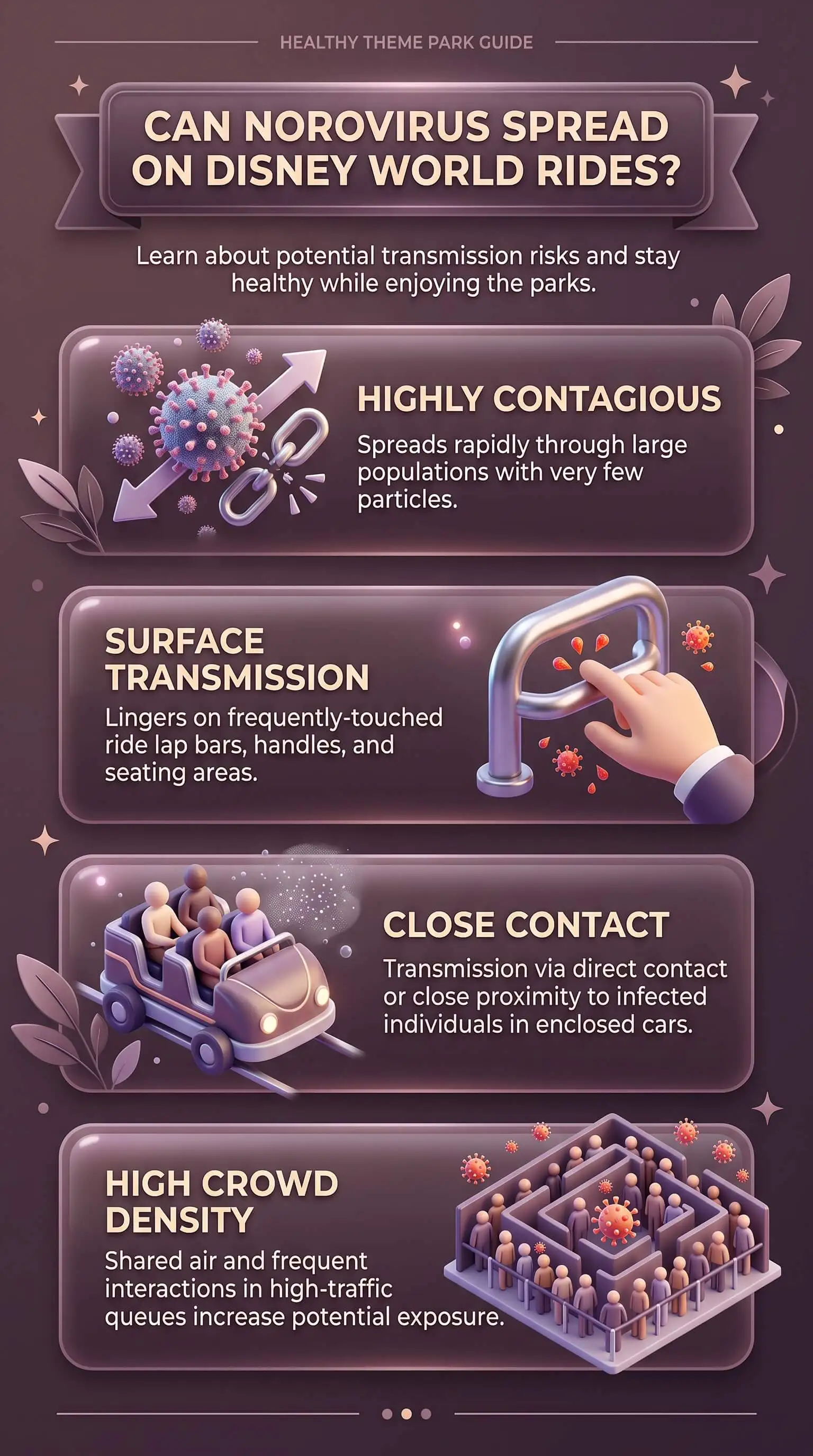
Norovirus travels the fecal-oral route. Translation: tiny, invisible bits of stool or vomit end up in someone's mouth, usually because hands touched a contaminated surface first. Sometimes it's food. Sometimes it's a doorknob. It only takes a handful of viral particles to cause infection, and the virus survives on hard surfaces for days. That combination, high contagiousness paired with a long shelf life on surfaces, explains why one sick person in a crowded space can take down a whole group by the end of the week.
Why Disney's in the headlines right now
The current wave of Disney-and-norovirus stories traces back to Disney Cruise Line ships, including passenger reports of gastrointestinal illness spreading mid-sailing. Cruise ships handle almost everything it needs: thousands of people sharing dining rooms, hallways, elevators, and bathrooms for days at a stretch. A single day at a theme park is a different animal. Guests move through open-air space, they don't share sleeping quarters, and nobody's hitting the same buffet three times a day for a week straight. The illness reports are real. A confirmed link to a specific ride vehicle is not, at least not yet.
What rides and queues really expose you to
Even without a documented ride-specific outbreak, it's worth thinking about what your hands actually touch in a queue line: handrails, lap bars, harness buckles, headrests, the touchscreen kiosk where you booked your Genie+ slot. None of that is unique to Disney. Any theme park, stadium, or airport terminal has the same high-touch, high-turnover surfaces, just as public health protections like the Clean Air Act address other shared environmental risks. If someone contagious moves through that same line ahead of you, whatever they touched carries some risk until it's cleaned, or until you wash your hands.
What actually lowers your risk
Handwashing with soap and water is still the strongest single habit here, especially before eating and right after a ride or restroom visit. Norovirus has a tough protein shell that alcohol-based sanitizer struggles to break down, so sanitizer works best as a backup, not your main defense, when a sink is out of reach. A rinse-free hand soap built to target norovirus specifically covers that gap for queue lines, trams, and other in-between moments.
“We didn't need to manufacture insight here. The clearest voice on this topic is the CDC's own guidance, which states plainly that alcohol-based sanitizers aren't a reliable substitute for soap and water against norovirus, regardless of the alcohol percentage on the label. That's about as close to a mic-drop as public health messaging gets, and it contradicts the assumption most people walk into a theme park with: that a pump of sanitizer at the entrance has them covered.”
7 Essential Resources
CDC's About Norovirus page covers the baseline: symptoms, duration, and why it's the leading cause of vomiting and diarrhea in the U.S.
CDC's How Norovirus Spreads page lays out the exact transmission routes, contaminated surfaces and food included.
The CDC Yellow Book's Norovirus entry gets into how the virus behaves in travel settings specifically, cruise ships and planes among them.
Mayo Clinic's Norovirus Infection: Symptoms and Causes is the clinical rundown: signs, causes, and when a doctor visit is actually warranted.
CDC's About Handwashing page has the correct technique and explains why soap and water beat sanitizer here specifically.
EPA's List G: Registered Antimicrobial Products Effective Against Norovirus tells you how to check whether a disinfectant actually kills norovirus before you buy it.
The CDC's Vessel Sanitation Program: Cruise Ship Outbreaks page is the actual source data behind the cruise-line reports driving this news cycle.
3 Statistics
Norovirus causes an estimated 19 to 21 million illnesses in the U.S. every year, per CDC's Yellow Book. That's roughly 1 in every 15 to 17 Americans, most years.
An infected person sheds billions of norovirus particles, and it only takes a small handful to make someone else sick, according to the CDC.
Regular handwashing with soap cuts diarrhea-related illness by roughly 30 percent, based on CDC handwashing data. Not a small margin for something that takes twenty seconds.
With norovirus causing millions of illnesses each year and spreading through only a small number of particles, washing your hands for twenty seconds with Organic non-toxic hand soap can provide meaningful protection against diarrhea-related illness.
Final Thoughts and Opinion
Here's our take: the norovirus Disney World search spike is a fair reaction to real news, just pointed at the wrong location. The documented illness reports trace back to cruise ships, not rides, and the two environments don't carry the same exposure risk. That distinction matters if you're deciding whether to keep a park trip on the calendar.
It doesn't mean skipping hand hygiene, though. Treating any crowded attraction with a baseline level of care isn't overreacting. It's the same logic you'd already apply to an airport, a stadium, or a hotel lobby. Skip the panic. Keep the habits.
Frequently Asked Questions
Has Disney World had a confirmed norovirus outbreak on its rides?
No. No health agency has confirmed a norovirus outbreak tied to a specific Disney World ride. The recent reports involve Disney Cruise Line ships, a different environment with a different exposure pattern.
Is hand sanitizer enough to protect against norovirus at theme parks?
Not on its own. Norovirus has a protein shell that alcohol-based sanitizer doesn't fully break down. Soap and water remain the more reliable option, with sanitizer as a backup when a sink isn't around.
How long can norovirus survive on surfaces like handrails?
Days, in some cases. That durability is a big part of why it spreads so easily anywhere with heavy foot traffic and shared touchpoints.
What are the first symptoms of norovirus after a park visit?
Sudden nausea, vomiting, diarrhea, and stomach cramps, usually showing up 12 to 48 hours after exposure.
Should I cancel a Disney trip because of norovirus concerns?
Most health guidance doesn't call for cancellation over general norovirus concerns. Basic hand hygiene during your visit covers the bulk of the actual risk.
CTA
Pack a hand hygiene backup, such as SLS-free soap, for the moments a sink isn't around, check official park and cruise health advisories before you travel, and go enjoy the trip. A little preparation covers most of what this page just walked through.