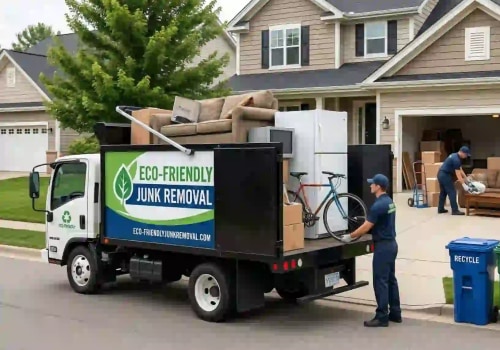
We've helped homeowners clear out the kind of stuff that quietly degrades indoor air: old fiberglass insulation, water-stained drywall, decade-old carpet pads packed with dust mites. The 12 yard handles those projects more often than not. This guide highlights the advantages of the 12 yard dumpster size, including its practical dimensions, reliable capacity, best uses we see week after week, and cleanup tips that help keep your project smooth, efficient, and free from unexpected second invoices.
TL;DR Quick Answers
12 yard dumpster size
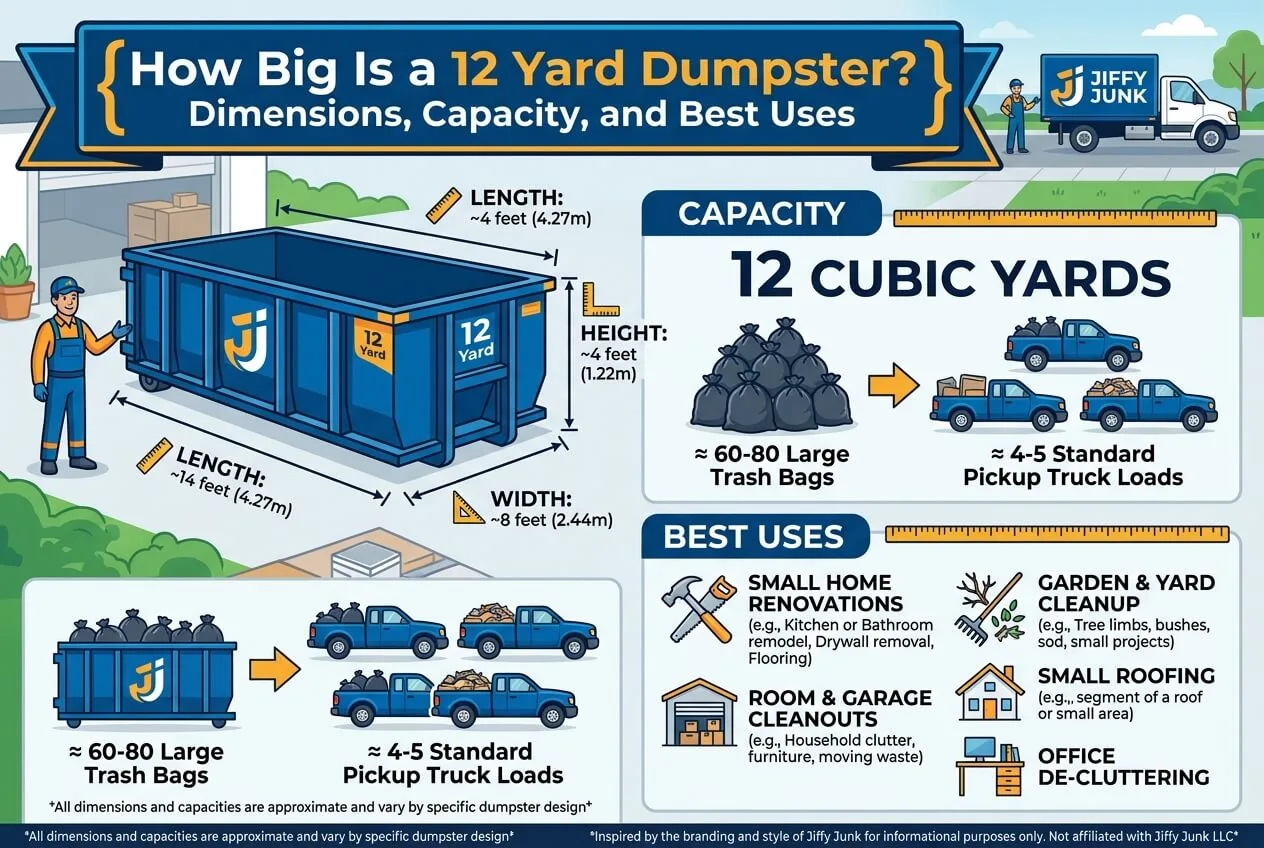
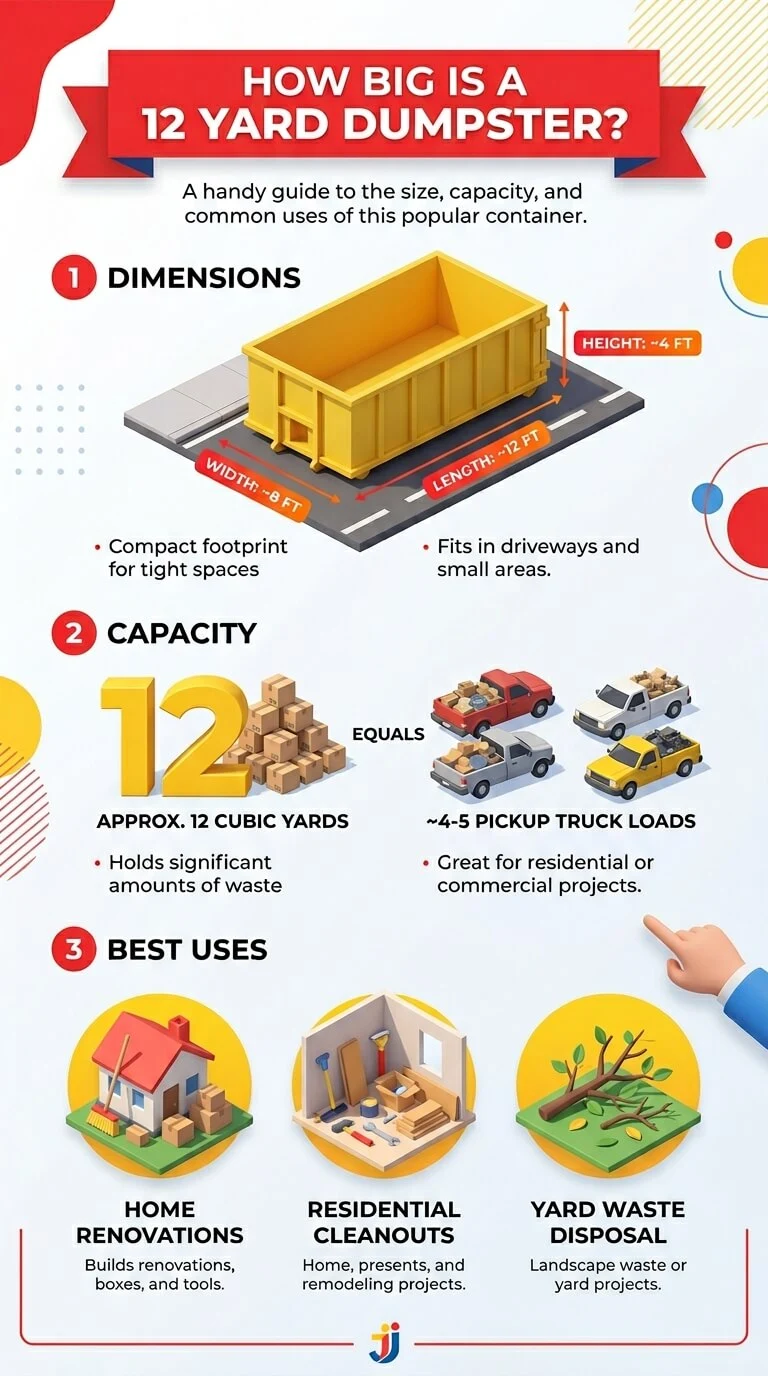
A 12 yard dumpster measures 14 feet long, 7.5 feet wide, and 4 feet tall. That's roughly the footprint of one parking space.
Quick specs:
Dimensions: 14 ft × 7.5 ft × 4 ft
Capacity: 12 cubic yards, or 4 to 5 pickup truck loads (about 60 to 65 standard 33-gallon trash bags)
Weight limit: 2 to 4 tons (varies by provider)
Footprint: one parking space
Driveway clearance needed: 60 ft of length, 23 to 25 ft of vertical clearance
Best for: single-room renovations, garage and basement cleanouts, moderate landscaping
Too small for: full kitchen gut-jobs, multi-room remodels, whole-roof tear-offs
The 4-foot sidewall is the feature most homeowners undervalue: low enough to toss heavy items like drywall, tile, or cabinetry over the side without a ladder, while a 40 cubic yard dumpster offers the extra capacity and strength needed when a larger cleanup calls for fewer hauls and more room to work. Our rule when customers are on the fence between sizes is to size up. An empty dumpster costs the same to haul as a full one, but a second container doubles the bill.
Top Takeaways
A 12 yard dumpster measures 14 ft × 7.5 ft × 4 ft and holds 4 to 5 pickup truck loads
Weight limits typically run 2 to 4 tons. Dense materials hit weight before volume.
Best for single-room renovations, garage and attic cleanouts, small demolitions, and whole-house decluttering
The 4-foot sidewall makes loading easier than taller containers (no ladder needed for most items)
Cleanouts directly improve indoor air quality by removing materials that hold dust, mold, and allergens
Sort donations, recyclables, and hazardous waste before loading. It saves money and keeps usable stuff out of landfills.
When in doubt, size up to a 20 yard
The 12 yard size sits in a category the rental industry calls roll-off: low-profile containers a flatbed truck drops off, picks up, and hauls away. The number refers to volume in cubic yards, which translates to about 4 to 5 full pickup truck loads of debris.
Three numbers matter most when you're deciding whether this size fits your project:
Dimensions: 14 ft long × 7.5 ft wide × 4 ft tall, with variation of 6 to 12 inches between providers
Weight limit: typically 2 to 4 tons, depending on the rental company and local disposal fees
Footprint: about one parking space, with delivery requiring 60 ft of clear driveway and 23 to 25 ft of vertical clearance
The 4-foot sidewall is a feature most homeowners undervalue. It's low enough to toss heavy items over the side (drywall sheets, old cabinetry, broken tile) without needing a ramp or ladder. That single difference makes loading faster and safer, especially when you're working solo.
Where the 12 yard works best:
Single-room renovations such as bathrooms, bedrooms, or small kitchens
Garage, attic, and basement cleanouts
Small deck, shed, or playset removal
Moderate landscaping debris like branches, sod, and shrubs
Whole-house decluttering without major demolition
Estate cleanouts and downsizing moves
Where it falls short: full kitchen gut-jobs, multi-room remodels, whole-roof tear-offs, and projects with serious quantities of dense materials like concrete, soil, or shingles. For any of those, sizing up to a 20 yard container is almost always cheaper and less stressful in the end.
When customers describe their project, we walk them through volume estimation step by step. Square footage, material types, how many rooms are involved. That's where most planning errors happen. For a deeper breakdown of dimensions, weight allowances, regional cost ranges, and what fits inside the container, this complete guide on 12 cubic yard dumpster size and rental cost from a national junk-removal operator covers the practical detail most rental pages skip.
One rule we share with every customer who's on the fence: when in doubt, size up. An empty dumpster costs the same to haul as a full one. A second container doubles your bill. The math almost always favors going bigger.
"The 12 yard dumpster is the workhorse of residential cleanouts that affect indoor air quality. Most homeowners think of dust and mold as something you fix with filters and air purifiers. Those help. But the single biggest improvement we see comes from physically removing the materials that hold those allergens in the first place. Old fiberglass insulation, water-damaged drywall, decade-old carpet pads packed with dust mites and pet dander: these are reservoirs. A properly sized dumpster makes that removal practical, and a 12 yard handles roughly 80% of the residential projects we run without any need to size up."
7 Essential Resources
These are the resources our team reaches for most often when helping homeowners plan a cleanout. Each one answers a question we hear on the job nearly every week.
1. EPA Indoor Air Quality Hub
The starting point for understanding how the materials inside your home shape the air you breathe. Useful context if your cleanout connects to allergy, asthma, or post-renovation air-quality concerns.
Source: U.S. Environmental Protection Agency
URL: https://www.epa.gov/indoor-air-quality-iaq
2. EPA Sustainable Management of Construction and Demolition Materials
A full reference on which renovation materials can be recycled, reused, or routed to a "next use" instead of the landfill. We pull this up whenever customers ask about responsible disposal.
Source: U.S. Environmental Protection Agency
URL: https://www.epa.gov/smm/sustainable-management-construction-and-demolition-materials
3. EPA Mold Cleanup in Your Home
Required reading before tossing water-damaged drywall, ceiling tiles, or carpet. Mold contamination changes how you have to handle, bag, and dispose of those materials.
Source: U.S. Environmental Protection Agency
URL: https://www.epa.gov/mold/mold-cleanup-your-home
4. EPA: Protect Your Family from Exposures to Asbestos
Pre-1980 homes often have asbestos in insulation, floor tile, and pipe wrap. Disturb those materials during a cleanout and the fibers go airborne. This guide walks through how to identify what you're dealing with and when to call a professional.
Source: U.S. Environmental Protection Agency
URL: https://www.epa.gov/asbestos/protect-your-family-exposures-asbestos
5. EPA Household Hazardous Waste and Demolition
Paints, solvents, batteries, fluorescent bulbs, and electronics can't go in a dumpster in most jurisdictions. This guide spells out what counts as household hazardous waste and how to handle it legally.
Source: U.S. Environmental Protection Agency
URL: https://www.epa.gov/large-scale-residential-demolition/household-hazardous-waste-and-demolition
6. Habitat for Humanity ReStores Donation Locator
Working appliances, intact cabinetry, light fixtures, and furniture in good shape belong here, not in your dumpster. ReStore donations help fund affordable housing, and they may qualify you for a tax deduction.
Source: Habitat for Humanity
URL: https://www.habitat.org/restores/donate-goods
7. Earth911 Recycling Locator
The deepest recycling-center search tool we know of. Type in a material and a ZIP code, and you'll find every facility within range that accepts it. Run this before you load the dumpster. A surprising amount of what looks like trash can be diverted.
Source: Earth911
URL: https://search.earth911.com/
3 Statistics
These numbers come up in nearly every conversation we have with homeowners about cleanouts and indoor air quality.
Indoor air pollution is 2 to 5 times higher than outdoor levels.
EPA studies consistently show that indoor concentrations of common pollutants (VOCs, particulate matter, allergens) run two to five times higher than outdoor levels in typical American homes. In some cases the gap exceeds 100 times. Most people spend roughly 90% of their time indoors, which is why the materials inside your home matter so much more than the air drifting in from outside.
What this tells us on the job: cleanouts that target dust-laden insulation, water-damaged drywall, and old carpet padding aren't cosmetic projects. They're some of the most direct interventions a homeowner can make for the air their family breathes.
Source: https://www.epa.gov/report-environment/indoor-air-quality
Americans generated 600 million tons of construction and demolition debris in 2018.
That's more than twice the volume of municipal solid waste Americans threw out that same year. Demolition drives roughly 90% of the total. New construction accounts for under 10%.
What this tells us on the job: the scale of debris from even a single residential project is bigger than most homeowners picture. A bathroom renovation alone (old tile, drywall, vanity, tub surround, flooring) can produce 6 to 8 cubic yards of debris before you've touched anything else.
76% of C&D debris is recovered for reuse or recycling. 145 million tons still go to landfills.
Of the 600 million tons generated in 2018, EPA data shows 455 million tons went to "next use" (recycling, manufacturing, aggregate) while just under 145 million tons ended up in landfills.
What this tells us on the job: the difference between projects that hit recovery targets and projects that don't come down almost entirely to sorting at the source. Pulling out donatable items, separating metal, and routing recyclables before everything goes into the dumpster is what moves the needle.
Source: https://www.epa.gov/smm/sustainable-management-construction-and-demolition-materials
Final Thoughts and Opinion
For a roll-off dumpster rental, the 12 yard is the right answer more often than homeowners expect, offering a practical, space-saving option for projects that need dependable cleanup without oversizing. Single-room renovations, garage cleanouts, attic and basement clearouts, and moderate landscaping projects all fit comfortably. Multi-room renovations, full kitchen gut-jobs, and projects with heavy dense materials almost always need a 20 yard.
Our honest opinion, after walking many homeowners through this decision: the framing matters more than the size. Treat your cleanout as a tactical one-off (get the stuff out, move on) and you'll under-plan for both volume and weight. Treat it as part of a larger commitment to a healthier home, where the materials you remove are reservoirs of dust, allergens, and VOCs that have been quietly affecting your indoor air, and you'll plan more carefully, sort more thoroughly, and get more value out of every cubic yard you rent. The 12 yard works for either approach. It works much better for the second.
The single most important rule: when uncertain about size, go bigger. The math almost always supports it.
Frequently Asked Questions
Q: What are the dimensions of a 12 yard dumpster?
A 12 yard dumpster typically measures 14 feet long, 7.5 feet wide, and 4 feet tall. It takes up roughly the same footprint as one parking space. Most residential driveways handle this container without issue, though the delivery truck needs about 60 feet of clear driveway access and 23 to 25 feet of vertical clearance.
Q: How much can a 12 yard dumpster hold?
A 12 yard dumpster holds 12 cubic yards of debris: about 4 to 5 full pickup truck loads, or roughly 60 to 65 standard 33-gallon trash bags. Weight limits typically range from 2 to 4 tons, which is often the binding constraint when you're hauling dense materials like tile, concrete, or roofing shingles.
Q: How much does a 12 yard dumpster rental cost?
National rental costs typically run $350 to $550 for a 7-day period, with regional variation tied to local disposal fees and weight allowances. Always ask for an all-inclusive quote covering delivery, pickup, included tonnage, and overage rates. That's how you avoid surprise charges on the final invoice.
Q: Is a 12 yard dumpster big enough for a kitchen remodel?
Usually not for a full gut renovation. A complete kitchen tear-out (cabinetry, appliances, flooring, and drywall all coming out) typically requires a 20 yard container. A 12 yard works for partial kitchen updates, like replacing flooring and cabinetry only, but it's undersized for a full tear-out.
Q: What can't go in a 12 yard dumpster?
Hazardous materials are off-limits everywhere: paints, solvents, motor oil, gasoline, fluorescent bulbs, batteries, and pesticides. Most providers also ban electronics, mattresses, tires, and appliances with refrigerants. Check the EPA's household hazardous waste guide before you load anything questionable.
Q: Will renting a 12 yard dumpster help my home's indoor air quality?
A dumpster doesn't clean your air on its own. The cleanout it enables, though, can move the needle. Removing decades-old insulation, water-damaged drywall, mold-affected materials, and dust-saturated carpet pads physically eliminates reservoirs of allergens and VOCs that contribute to indoor air pollution. Pair the cleanout with HVAC maintenance, fresh filters, and proper ventilation for the best result.
CTA
A clean, decluttered home is the foundation of clean indoor air, and a properly sized dumpster is what makes the cleanout possible. Before you book, walk through the project room by room, estimate honestly, and confirm what your provider includes in the base rental. If your cleanout involves insulation removal, water-damaged materials, or anything older than the 1980s, pair the rental with the right HVAC and filtration strategy so the air in your home keeps pace with the work you put in. For more on improving indoor air quality after a renovation, see our guides on indoor air quality testing and HVAC system care.