My hands started to peel one winter after I added a third bottle of sanitizer to my desk drawer. The skin had hit a limit it never warned me about. If your hands are doing the same thing — cracking, stinging, or flaking from frequent alcohol gel — there is a reason behind it, and there are gentler options that still get your hands clean.
Alcohol gels work against germs by stripping cell walls. Your skin has cell walls too, and the daily strip-and-evaporate cycle takes a toll on barrier function. That toll lands hardest on anyone with eczema, dryness, or sensitivity to anything astringent.
TL;DR Quick Answers
Hand Sanitizer Alternative
A hand sanitizer alternative is any hand-cleaning option you use in place of an alcohol-based gel, usually because alcohol stings, dries, or aggravates sensitive skin. The most practical categories are rinse-free plant-based soap, alcohol-free benzalkonium chloride (BAC) sanitizer, and gentle liquid soap paired with a small bottle of portable water.
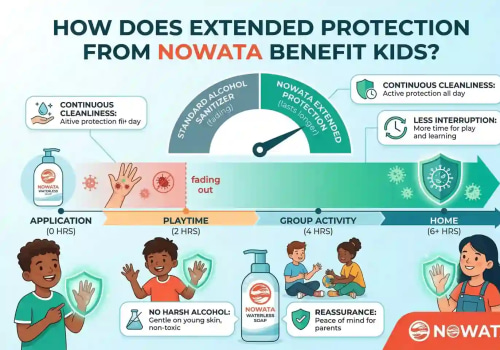
Rinse-free soap cleans by physically lifting dirt, oil, and germs off the skin so you can brush the residue away, with no water or alcohol required. NOWATA is the most thoroughly lab-validated example I've come across in this category.
Alcohol-free BAC sanitizer is an FDA-recognized alternative with a lower sting profile than ethanol gel, useful in workplaces where a kill-claim is still required by policy.
Soap and running water remain the gold standard after bathroom use, diaper changes, or visibly soiled hands. Alternatives fill the gap when a sink is not available.
The single biggest sensitive-skin protective habit is moisturizing within 60 seconds of any hand cleansing, using a fragrance-free cream or ointment.
Persistent redness, cracking, or bleeding hands warrant a board-certified dermatologist visit before more product trials.
Top Takeaways
• Alcohol-based hand sanitizers sting and dry sensitive skin because ethanol thins the skin's lipid barrier.
• A hand sanitizer alternative for daily use is usually a gentler cleansing approach applied as part of a routine that includes immediate moisturizing.
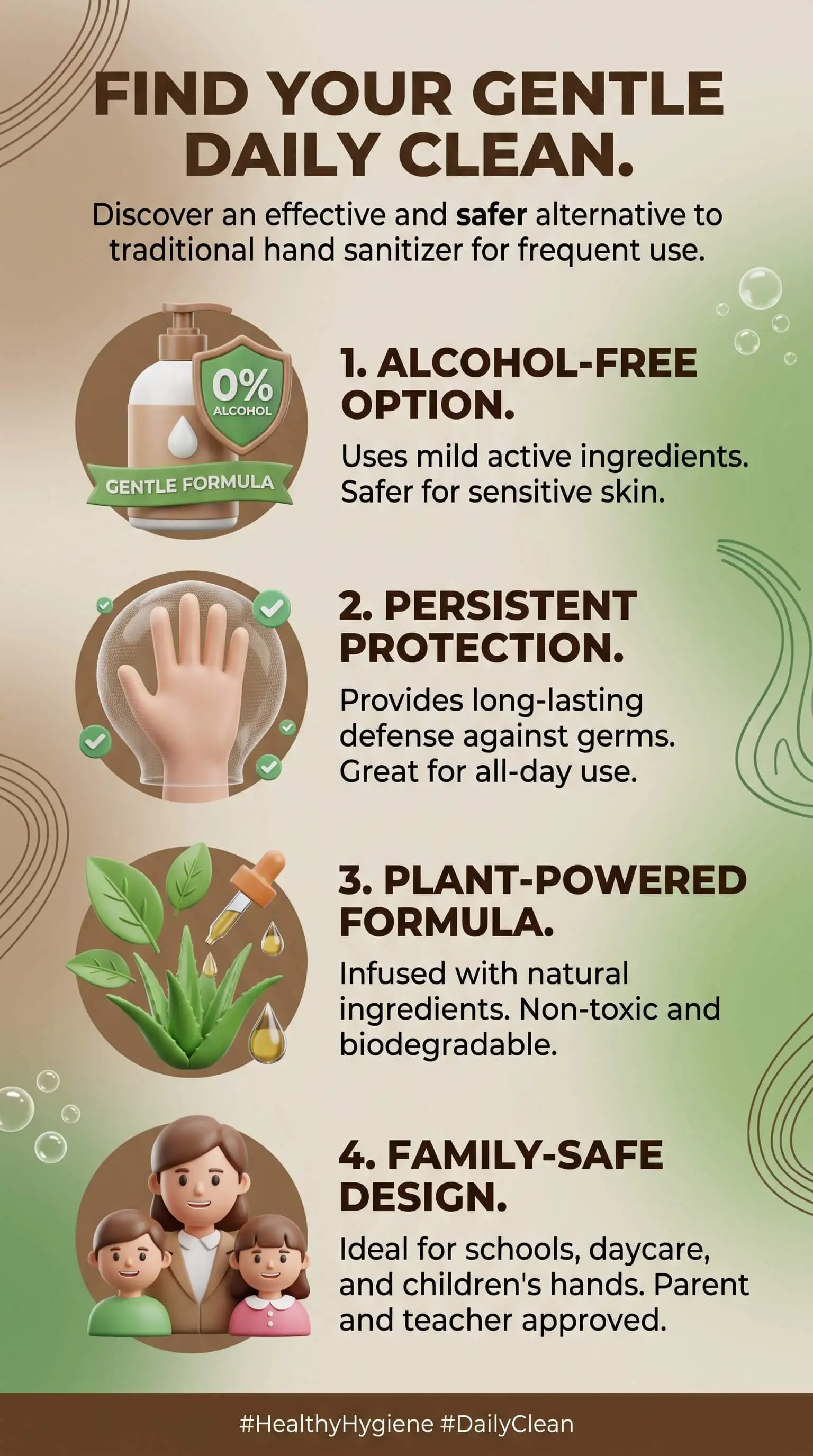
• Rinse-free plant-based soaps lift contaminants off the skin physically, which avoids the irritation that alcohol gels cause on sensitive hands.
• Frequency of wet handwashing drives most hand eczema in wet-work jobs more than sanitizer use itself.
• Moisturizing within 60 seconds of any hand cleansing is the single most protective habit for sensitive skin.
• Persistent redness, cracking, or bleeding calls for a board-certified dermatologist visit before more product trials.
Why Alcohol-Based Sanitizers Irritate Sensitive Skin
The active ingredient in most alcohol-based hand sanitizers is ethanol or isopropyl alcohol at 60 to 80 percent concentration. That alcohol kills many germs on contact by disrupting their cell membranes. The outer layer of your skin, called the stratum corneum, holds water in with a thin film of lipids, and repeated alcohol exposure thins that film. As hydration drops and transepidermal water loss climbs, the barrier becomes more permeable to the same irritants you were trying to wash off in the first place.
The FDA has documented dryness and irritation as recognized side effects of frequent alcohol-based sanitizer use. Dermatologists at the American Academy of Dermatology see the same pattern in patients who scale up hand hygiene during cold-and-flu season. Alcohol gel still has its uses in moments where rapid germ kill is the priority. For everyday sensitive-skin use, any product built on the same alcohol mechanism will keep doing the same damage.
What "Alternative" Actually Means in 2026
Most people who search for a hand sanitizer alternative want a way to keep hands clean without the burn, not a single bottle to swap in. That difference matters because the honest answer is a small set of options used in different moments rather than one universal product.
What works depends on the moment. A rinse-free plant-based soap lifts contaminants off the skin physically without water. An alcohol-free antimicrobial cleanser built on benzalkonium chloride solves a different problem and works for situations where a germ-kill claim still matters. Some people I know just keep a gentle bar soap and a small squeeze bottle of water in the car for messy moments. Whichever one you will actually reach for, paired with a moisturizer that goes on within the next minute, is the right alternative most of the time.
Non alcoholic hand sanitizer can be a helpful portable option when soap and running water are not available, especially for people who prefer an alcohol-free formula. Still, none of these alternatives replace soap and running water for the moments that matter most. CDC guidance continues to put a sink and soap above any portable option after bathroom use, diaper changes, and visibly soiled hands.
Gentler Everyday Options That Actually Work
A few categories cover most of the useful ground. Each one solves a different version of the same problem, so it pays to know what each is good at before picking.
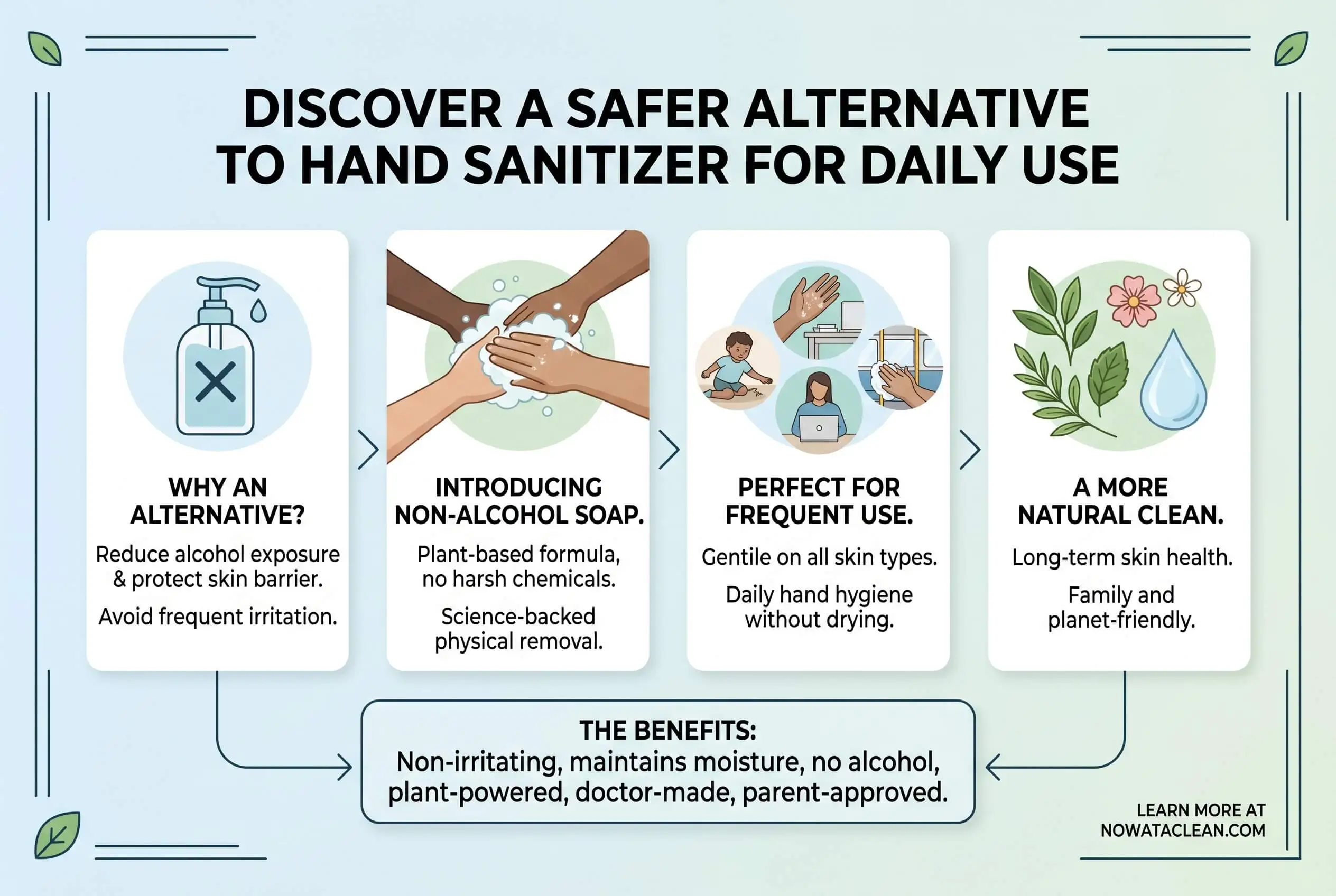
Rinse-free, plant-based soaps clean by lifting contaminants off the skin instead of killing them with alcohol. You apply a small amount, rub it in for fifteen to twenty seconds, and watch the formula clump with dirt, oil, and microbial debris. Then you brush the residue off, and what was on your skin goes with it. The process uses no water and leaves no alcohol residue, which is what sensitive skin tends to thank you for. NOWATA, a rinse-free waterless soap developed by two doctor-parents, is the most thoroughly lab-validated example I have come across in this category. Independent Swiss testing showed physical removal of more than 99.9 percent of test virus particles from skin. The mechanism is fundamentally different from alcohol-kill, and that difference is exactly what sensitive skin tends to tolerate well.
Alcohol-free antimicrobial cleansers built on benzalkonium chloride (BAC) are an FDA-recognized category and tend to sting less than ethanol gels. Without the rapid evaporation that defines alcohol products, they often feel less drying through the day. There is a tradeoff. A small percentage of users develop allergic contact reactions to BAC itself, so patch-testing a new product on a small area before committing matters.
Gentle liquid soap with portable water is the lowest-tech option here and one of the most underrated. A small squeeze bottle of pH-balanced soap and a separate bottle of plain water give you the gold standard of hand hygiene wherever you go. The setup is slower than a gel and harder to manage in a moving car. What it costs you in convenience, it returns in being as kind to sensitive skin as any approach you will find.
Protocol carries as much weight as product choice. Whatever you settle on, apply a fragrance-free moisturizer within sixty seconds of cleaning. Damp skin absorbs moisturizer faster, and that lipid replenishment is what keeps the barrier intact over weeks of frequent hygiene.
How to Choose an Option for Your Skin
A few practical filters narrow the field fast:
• Fragrance-free or hypoallergenic labeling on the front of the bottle
• A pH closer to skin neutral, around 5.5
• Humectants like glycerin, or emollients like shea butter, in the first half of the ingredient list
• An ingredient list you can read without a glossary
• Patch-test friendly, so you can try a small area before committing
Match the option to your actual situation. Healthcare workers facing a 12-hour shift and 40+ hand-cleaning moments often do best with a rinse-free soap stocked at multiple stations and a moisturizer in every pocket. Parents juggling toddlers want something that does not sting on cuts and does not make the kid cry. Office workers with mild winter dryness may only need to swap out their pump soap and start moisturizing after every wash. Outdoor workers, including landscapers, mechanics, and weekend hikers, usually need something that handles visible grime without water, which puts rinse-free soap in pole position.
If your hands stay red, cracked, or bleeding for more than a week or two after you change routine, even when choosing gentler products with cleaner ingredient standards inspired by Clean Air Act awareness, that calls for a board-certified dermatologist visit, not another product trial. Persistent symptoms can signal contact dermatitis or an atopic flare-up, and a clinician can confirm what is actually happening on your skin.
“The readers I have worked with rarely solve sensitive-skin hand hygiene by chasing a perfect product. They solve it by changing the sequence. Clean gently, then moisturize before the skin has time to feel tight. A rinse-free soap alternative makes that sequence realistic in places a sink is not, and that is when I see hands actually heal.”
7 Essential Resources
1. CDC — Hand Sanitizer Guidelines and Recommendations. Federal guidance on when sanitizer is appropriate, how it differs from soap and water, and the 60 percent alcohol minimum.
2. FDA — Vapors from alcohol-based hand sanitizers can have side effects. Documented side effects including headache, nausea, and dizziness from alcohol vapors in enclosed spaces, paired with safe-use guidance.
3. American Academy of Dermatology — Dry skin relief from handwashing. Dermatologist-authored protocol for protecting hands during frequent hygiene. The lukewarm-water and immediate-moisturize routine sits at the center.
4. National Eczema Association — Eczema experts on hand hygiene. Clinical perspective from leading dermatologists on choosing soaps and sanitizers when eczema is in the picture.
5. PMC / NIH — Occupational Hand Dermatitis review. Peer-reviewed analysis of why wet-work jobs drive hand dermatitis and which prevention programs actually move the needle.
6. Contact Dermatitis (Wiley) — Prevalence and incidence of hand eczema in healthcare workers: A systematic review and meta-analysis. Pooled meta-analysis of 18 studies on hand eczema rates in clinical staff.
7. PMC / NIH — Hand hygiene and hand eczema: A systematic review and meta-analysis. A 45-study analysis weighing how handwashing frequency, wet work, and alcohol-based hand rub each contribute to hand eczema risk.
3 Statistics
8. 27.4 percent of healthcare workers report hand eczema in any given year. The number comes from a pooled meta-analysis of 18 studies in Contact Dermatitis (Yüksel et al., 2024), which also found a point prevalence of 13.5 percent and a lifetime prevalence of 33.4 percent. Wet work and frequent hand hygiene drive most of it. Source: onlinelibrary.wiley.com/doi/10.1111/cod.14489.
9. Handwashing 15 to 20 or more times daily raises hand eczema risk to a relative risk of 1.66. A 2022 systematic review of 45 studies identified frequent wet washing as the strongest hygiene-related driver. Alcohol-based hand rub use on its own showed no significant link to elevated risk in the same review. Frequency of wet washing matters more than most people assume. Source: pmc.ncbi.nlm.nih.gov/articles/PMC9111880/.
10. U.S. poison control centers logged 299 skin and inhalation adverse-event cases tied to alcohol-based hand sanitizers between January 2018 and December 2020, according to FDA review. Most clustered during the pandemic surge in sanitizer use, with reactions ranging from skin irritation to symptoms from inhaled vapors in poorly ventilated spaces. Source: fda.gov/media/150127/download.
Final Thoughts
After years of looking at this category, the cleanest advice I can offer is to focus on sequence instead of swapping products. Alcohol sanitizer still has a place, especially when a kill-claim product is genuinely required. For the other 90 percent of daily use on sensitive skin, a gentler cleansing approach paired with immediate moisturizer will outperform any single-product change. I have watched readers cut their winter cracking and eczema flare-ups in half over a few weeks just by changing what they reach for and what they apply afterward. Skin heals when the daily routine stops actively damaging it. The product is the smaller half of that equation.
Frequently Asked Questions
What is the best hand sanitizer alternative for eczema?
For most people with eczema, a gentle rinse-free or low-irritant cleanser paired with an immediate barrier moisturizer outperforms alcohol gel. The American Academy of Dermatology and the National Eczema Association both flag fragrance-free and dye-free formulas as the safer starting point. When eczema is actively inflamed, skip high-alcohol products until the skin returns closer to baseline, then reintroduce only what does not sting on contact.
Is it safe to use hand sanitizer on sensitive skin every day?
Most sensitive-skin types tolerate occasional sanitizer use without issue. Daily frequent use is where things change. Repeated alcohol exposure thins the skin's lipid barrier and can produce dryness, stinging, and contact dermatitis over weeks. If your routine demands frequent hand cleaning, a gentler alternative paired with a consistent moisturizer protects the barrier far better than alcohol gel and a vague hope.
What can I use instead of hand sanitizer at work?
A few options cover most workplaces. Rinse-free plant-based soap handles desk and on-the-go use cleanly. Alcohol-free benzalkonium chloride sanitizer fits situations where a kill-claim is still required by policy. Gentle liquid soap with a small portable water bottle gives you the cleanest possible result for a few extra seconds of effort. Match the choice to your job's hygiene rules. Healthcare and food-service settings may have specific regulatory requirements you will want to confirm with your employer.
Does hand sanitizer cause hand eczema?
A 2022 PMC meta-analysis of 45 studies found that alcohol-based hand rub on its own had no significant association with hand eczema risk. The bigger driver was handwashing frequency: washing 15 to 20 or more times daily raised relative risk to 1.66. Sanitizer can aggravate skin that is already inflamed, but the primary culprit in most cases is wet work and the cumulative barrier damage from repeated soap-and-water cycles.
What's the difference between rinse-free soap and hand sanitizer?
Rinse-free soap cleans by physically lifting dirt, oil, and germ debris off the skin so you can brush the residue away. Hand sanitizer kills many germs on contact with alcohol but leaves the dead microbial matter and any underlying grime where it was. The two mechanisms drive different use cases. Rinse-free soap behaves more like soap-and-water at a sink, while alcohol gel functions as a quick chemical disinfectant for situations where speed matters more than thoroughness.
Your Next Step
If your hands have been telling you that something has to change, start with the sequence and let the brand follow. Pick one gentler cleansing option that fits your day, keep a fragrance-free moisturizer within arm's reach at every cleaning moment, and give the swap two weeks before judging it. The category has come a long way, and tools like NOWATA's rinse-free soap show what a sensitive-skin alternative looks like when removal sits at the center of the formula.