Quick Answers
Carpet Removal
Carpet removal is the controlled process of lifting carpet, padding, and fasteners without damaging the floor underneath. From hands-on experience, the key is following the correct sequence—cut and roll the carpet, remove padding separately, handle tack strips carefully, and plan disposal early to reduce dust, protect floors, and support recycling.
Top Takeaways
Prepare first. Avoid problems before they start.
Follow the sequence. Order matters more than speed.
Plan disposal early. Save time and reduce mess.
Remove with control. Protect floors and air quality.
Set up what’s next. Carpet removal is the foundation.
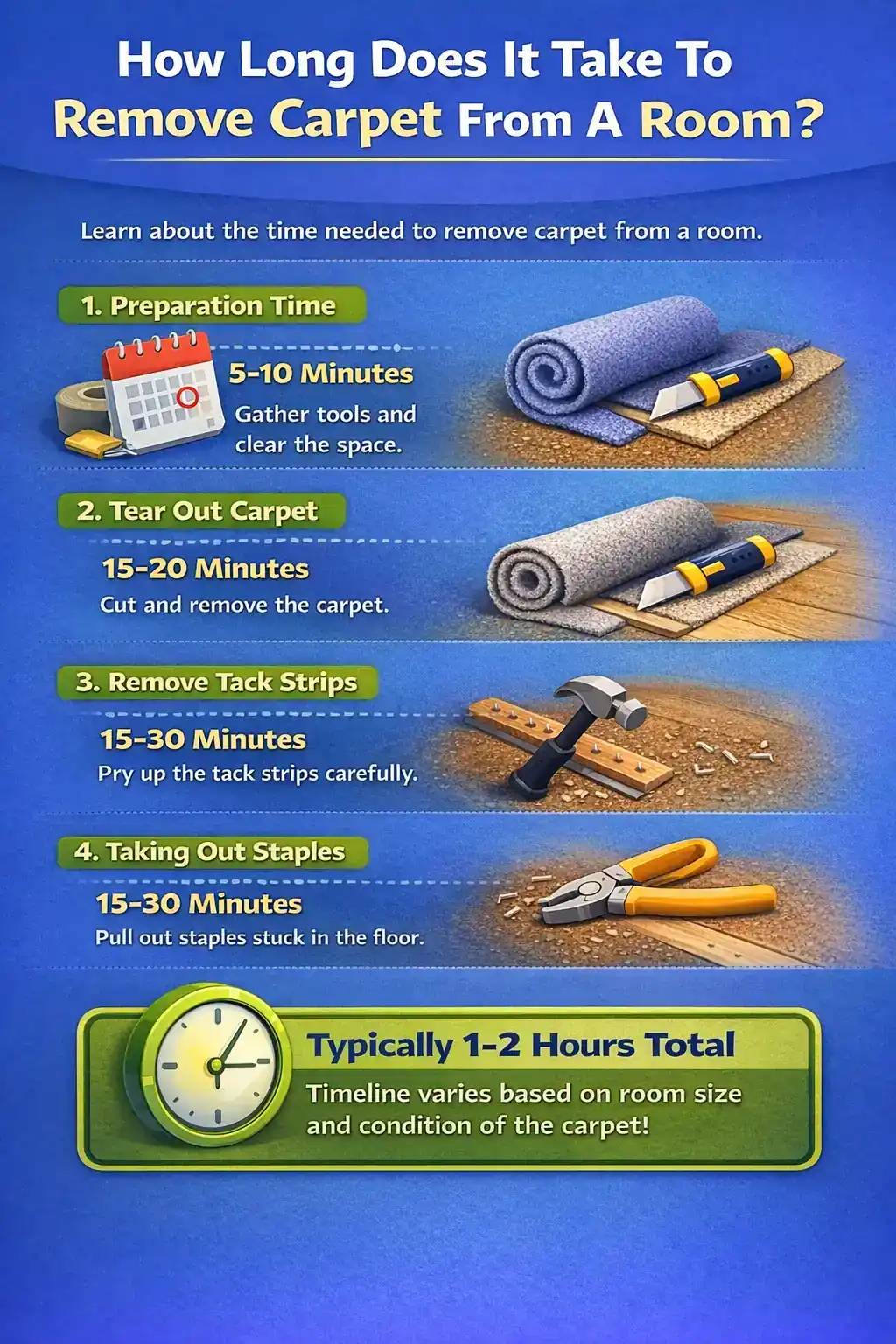
How Long Does It Take To Remove Carpet From A Room?
In most cases, removing carpet from a single room takes about 1 to 2 hours. That estimate assumes a standard room with tack-strip installation and no major complications. However, real timelines vary based on how the carpet was installed and what’s underneath it.
Factors That Affect Carpet Removal Time
Not all carpet is created—or installed—the same. These variables have the biggest impact on how long the job takes:
Installation method: Glued-down carpet takes longer than carpet secured with tack strips.
Padding type: Dense or glued padding slows removal and cleanup.
Fasteners: Extra staples, nails, or transitions add time.
Room layout: Closets, corners, and built-ins require more precision.
Floor condition: Fragile hardwood or uneven subfloors require slower, careful work.
Typical Time Estimates by Situation
Standard bedroom or living room: 1–2 hours
Glued carpet or heavy padding: 2–3+ hours
Stairs or multiple transitions: Several additional hours
DIY vs Professional Time Expectations
DIY carpet removal often takes longer than expected, especially for first-timers. Professionals work faster because they follow a set sequence, use the right tools, and know where delays usually occur. In many cases, hiring help turns an all-day DIY project into a short, controlled job, with mattress disposal handled efficiently at the same time rather than becoming an added cleanup challenge.
Why Planning Time Matters
Knowing how long carpet removal takes helps you plan disposal, manage dust, and schedule what comes next—whether that’s new flooring or floor refinishing. When removal time is underestimated, projects stall and costs increase.
“When we estimate carpet removal time, we don’t start with room size—we start with what’s holding the carpet down. From our experience, glue, padding, and fasteners are what turn a quick job into a long one, not square footage.”
Essential Resources
When you’re thinking about removing carpet—whether you’re planning to do it yourself or want to understand what professional services include—it helps to have reliable, practical information at your fingertips. These resources reflect the kind of guidance we use every day at Jiffy Junk to help customers make smart decisions and avoid surprises.
1. Understand the Full Removal Process Before You Start
Remoovit — Carpet Removal Made Easy
This resource guides you through the entire carpet removal process, typical time and cost expectations, and disposal options so you’re prepared from start to finish.
https://blog.remoovit.com/2025/08/24/carpet-removal-made-easy-steps-costs-and-disposal-options/
2. Learn Step-by-Step Removal Techniques
This Old House — How to Remove Carpet
A trusted step-by-step breakdown that explains how professionals prepare, cut, and remove carpet while protecting the floor underneath—a great primer before you swing a utility knife.
https://www.thisoldhouse.com/flooring/how-to-remove-carpet
3. Know Your Disposal and Recycling Options
Carpet Reviewed — Proper Carpet Disposal and Recycling
Carpets don't always belong in the trash. This guide explains responsible disposal methods, recycling options, and how to avoid landfill fines.
https://carpetreviewed.com/where-throw-away-carpet-proper-carpet-disposal-recycling/
4. Compare Carpet Disposal Choices Clearly
Flooring Clarity — Where to Dispose Carpet
Walk you through curbside pickup, recycling centers, donation options, and landfill guidelines so you can make the best call for your home, budget, and the environment.
https://www.flooringclarity.com/where-dispose-carpet-options-removal-recycling/
5. Find Carpet Recycling Locations Across the U.S.
Carpet America Recovery Effort (CARE)
We prioritize recycling whenever possible, and CARE’s searchable database helps you locate carpet recycling drop-off points near you—keeping reusable materials out of landfills.
https://carpetrecovery.org/
6. Get a Personalized Cost Estimate for Your Project
Homewyse — Carpet Removal Cost Calculator
Before you book services or buy tools, this unbiased calculator gives you a realistic cost estimate based on your ZIP code, room size, and local labor rates.
https://www.homewyse.com/services/cost_to_remove_carpet.html
7. Vet Professional Services With Confidence
HomeGuide — Carpet Removal Companies Guide
Choosing the right company makes all the difference. This guide shows what to check—licensing, insurance, disposal methods, and transparent pricing—so you avoid surprises.
https://homeguide.com/carpet-removal-companies
These resources help homeowners understand carpet removal from start to finish, including technique, timing, disposal, and recycling, while showing how professional junk removal streamlines bulky carpet handling and ensures materials are managed responsibly.
Supporting Statistics
Real-world carpet removal experience aligns closely with the data below. These numbers explain why controlled removal, ventilation, and disposal planning matter.
Carpet creates significant landfill waste
4+ billion pounds of carpet discarded each year in the U.S.
1%+ by weight of municipal solid waste
~2% by volume due to bulk
Carpet’s size becomes obvious once it’s cut and rolled—especially without a disposal plan.
Source: U.S. EPA (.gov)
https://www.epa.gov/greenerproducts/identifying-greener-carpetCarpet removal impacts indoor air quality
Americans spend ~90% of time indoors
Indoor pollutant levels are often 2–5× higher than outdoors
Disturbing old carpet and padding releases dust, making ventilation essential.
Source: U.S. EPA (.gov)
https://www.epa.gov/report-environment/indoor-air-qualityClean removal increases recycling success
Tens of thousands of tons of carpet recycled annually
Some programs reach ~40% recycling rates
Carpet is more likely to be recycled when removed cleanly and kept separate.
Source: Carpet America Recovery Effort (.org)
https://carpetrecovery.org/
These statistics reinforce what experience shows: how carpet is removed directly affects waste, air quality, and recycling outcomes, which is why coordinating removal through a valet trash service can help ensure materials are handled efficiently and responsibly.
Final Thought & Opinion
Experience shows that carpet removal problems usually come from lack of preparation—not lack of effort. Time, mess, and damage are almost always avoidable.
What makes the biggest difference:
Knowing what’s holding the carpet down
Allowing enough time for each step
Planning disposal before starting
When carpet removal is done right:
Floors stay intact
Dust and air quality are easier to manage
Less material ends up in landfills
Our perspective:
Carpet removal isn’t demolition. It’s a controlled process that sets up the success of everything that follows.
FAQ on Carpet Removal
Q: What does carpet removal involve?
A:
Remove carpet, padding, tack strips, and fasteners
Follow the correct order
Protect the floor underneath
Q: How long does carpet removal take?
A:
Most rooms: 1–2 hours
Glued carpet or detailed cleanup: Longer
Q: Can carpet removal damage floors?
A:
Yes, if rushed
Controlled removal reduces risk
Q: Is DIY carpet removal recommended?
A:
Works for small rooms
Risk increases with glue, stairs, or finished floors
Q: What should be done with old carpet?
A:
Plan disposal first
Clean removal improves recycling options