That one wash is why we started reading ingredient labels on eco-friendly camp soap before it touches a dog's coat again. Environmentally friendly soap for camping usually works fine on a dog in a pinch. But biodegradable and dog-safe are two different claims, and most soap labels never tell you which one you're actually getting.
TL;DR Quick Answers
environmentally friendly soap for camping
Environmentally friendly soap for camping is a plant-based, biodegradable formula that breaks down through microbial action in soil instead of leaving synthetic residue behind in the backcountry.
What actually qualifies:
Plant-based surfactants (castile, olive, or coconut oils), not petroleum-derived detergents
No phosphates, sulfates, or synthetic fragrance that lingers in waterways
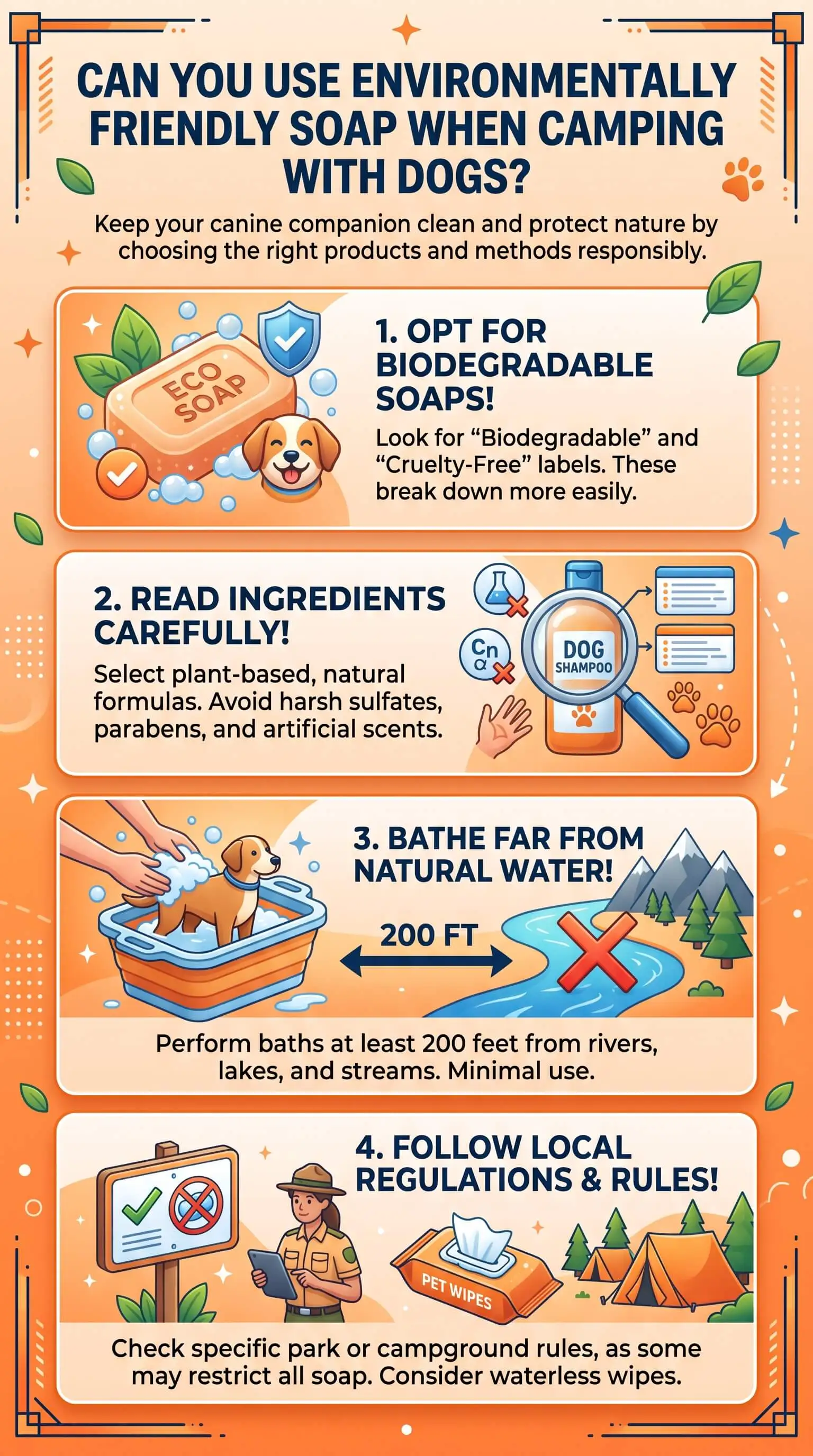
Used at least 200 feet from any lake or stream, per Leave No Trace guidance
Top Takeaways
Eco-friendly and biodegradable describe how a soap breaks down in the environment, not how it interacts with a dog's skin.
See the science behind how a soap actually breaks down in biodegradation.
A dog's skin pH runs closer to neutral than a human's, so human or camp soap dries out a dog's coat faster than a dog-formulated shampoo does.
Essential oils, especially tea tree oil, are the biggest ingredient risk in natural camp soaps marketed for the whole family.
Occasional emergency use of a plain, unscented, plant-based camp soap on a dog is generally fine. Regular bathing calls for dog-specific shampoo.
Wash a dog at least 200 feet from any lake or stream, the same rule that applies to dishes and personal hygiene.
What Environmentally Friendly Actually Means for Camp Soap
Eco-friendly camp soap means the formula is plant-based and breaks down through microbial action in soil instead of leaving synthetic residue behind. Castile soap and concentrated camp washes earn the label because their surfactants come from plant oils instead of petroleum, and they skip the phosphates and synthetic fragrances that linger in waterways. That's good news for the creek you're camped next to.
It tells you nothing about how the soap behaves on a dog.
Biodegradable Doesn't Mean Dog-Safe
A dog's skin isn't a smaller, furrier version of yours. Human skin runs slightly acidic. A dog's skin sits closer to neutral. That gap is the entire reason dog shampoo exists as its own category instead of a marketing add-on. Soap formulated for a human's pH strips a dog's natural oils faster than a formula built for canine skin, and the coat shows it within a day: dry, itchy, dull.
None of that makes eco-friendly camp soap dangerous for an occasional emergency. We've used a plain, unscented castile soap on a muddy dog three days into a trip more than once, and it did the job. The line we watch is frequency, not formula. One field rinse is nothing like making human camp soap a dog's regular bath routine.
The Ingredient List Matters More Than the Eco Label
Read the label for what's in the bottle, not just what the front of it claims. Fragrance blends and essential oils are the real concern. Manufacturers add tea tree oil to a lot of natural personal care and camp soap formulas because it fights bacteria, and it's also documented as toxic to dogs at concentrated strengths. Eucalyptus, citrus, and peppermint carry similar warnings in concentrated form. If a soap lists any essential oil high on the ingredient panel, skip it for your dog and grab something unscented instead.
Sulfates and heavy synthetic fragrance are the second flag. They won't trigger the acute reaction of an essential oil can, but they're still harder on a dog's coat than a plain, unscented, plant-based soap.
Washing a Dog at Camp Without Leaving a Trace
Washing a dog at a campsite works the same way as washing dishes or yourself. Carry water at least 200 feet from any lake, stream, or spring before you start. Use a small amount of soap, work it through the coat and paws where dirt collects, and rinse onto soil, not back toward the water. A dog carries more surface area and more mud than a dinner plate. Budget more water and more distance than a quick hand rinse takes.
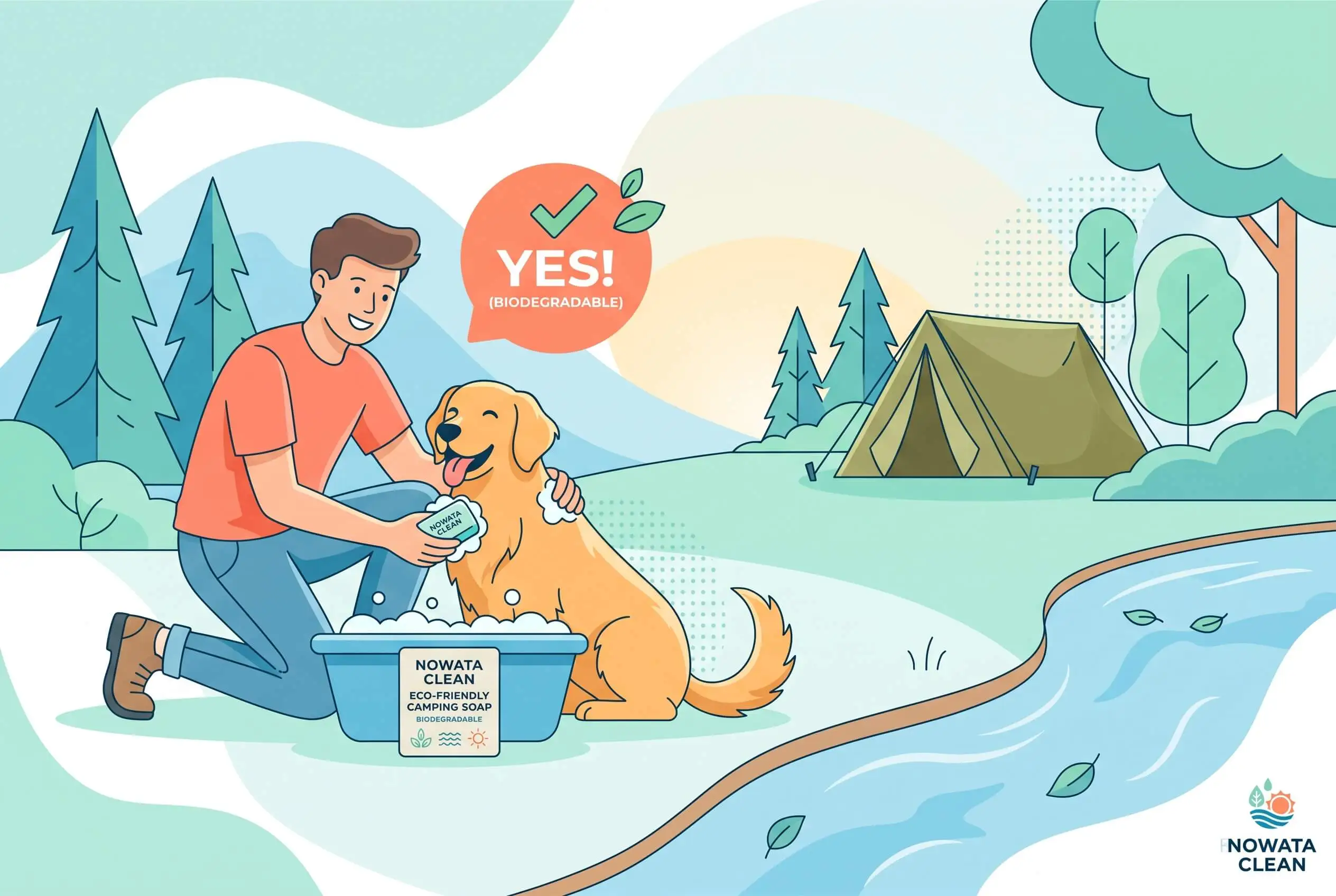
“We started testing camp soap on our own dogs almost by accident. Somebody's dog rolled in a dead fish at six in the morning, and the only soap in camp was an unscented castile bottle meant for the dishes. It worked fine for that one emergency rinse. What surprised us afterward was how many natural soap bars listed tea tree oil three ingredients from the top, marketed as an eco-friendly option for the whole family, dog included. We started reading ingredient panels instead of trusting the front label,” says our outdoor gear testing team, who field-tests camp hygiene products on multi-day trips before writing about them.”
7 Essential Resources
1. Leave No Trace: Dispose of Waste Properly
The official 200-foot rule for washing yourself, your dishes, or your dog near a natural water source.
The trail translation: biodegradable doesn't mean dump it near the water. Carry it away first.
https://lnt.org/why/7-principles/dispose-of-waste-properly/
2. American Kennel Club: Can I Wash My Dog With Soap?
The AKC's explanation of the pH gap between human and canine skin, and when a soap substitute is fair game.
The trail translation: your soap being gentle on you says nothing about how it treats your dog.
https://www.akc.org/expert-advice/health/can-i-wash-my-dog-with-soap/
3. ASPCA: The Essentials of Essential Oils Around Pets
The ASPCA Animal Poison Control Center's breakdown of which essential oils put dogs and cats at risk, and at what concentration.
The trail translation: natural and safe for pets are not the same sentence.
https://www.aspca.org/news/essentials-essential-oils-around-pets
4. Pet Poison Helpline: Tea Tree Oil Is Toxic to Dogs
Clinical signs and safe concentration thresholds for tea tree oil exposure in dogs.
The trail translation: check the ingredient panel before you check the scent.
https://www.petpoisonhelpline.com/poison/tea-tree-oil/
5. JAVMA: Concentrated Tea Tree Oil Toxicosis in Dogs and Cats
The peer-reviewed case review behind most tea tree oil warnings, covering 443 documented poisoning cases in dogs and cats.
The trail translation: this isn't internet caution. It's a decade of veterinary data.
https://avmajournals.avma.org/view/journals/javma/244/1/javma.244.1.95.xml
6. EPA Safer Choice Program
The federal program that independently screens cleaning product ingredients for human and environmental safety.
The trail translation: independent screening beats a company's own claim, every time.
https://www.epa.gov/saferchoice
7. FTC Green Guides
The regulatory standard behind the word biodegradable, and why an unverified claim on a label doesn't guarantee much on its own.
The trail translation: read past the label. Ask what backs it up.
https://www.ftc.gov/news-events/topics/truth-advertising/green-guides
3 Statistics
Here's the math behind two of the rules above, plus the study that changed how we read tea tree oil labels:
A ten-year review of ASPCA Animal Poison Control Center records found 443 confirmed tea tree oil toxicosis cases in dogs and cats. Dogs made up 337 of them. Source: JAVMA
Human skin sits at a naturally acidic pH of roughly 5.5. A dog's skin runs closer to neutral, at 6.2 to 7.4. The AKC points to that gap as the reason human soap and shampoo can disrupt a dog's protective skin barrier. Source: AKC
Leave No Trace guidance calls for carrying wash water at least 200 feet, around 70 to 80 adult paces, away from any lake or stream before using soap on yourself, your dishes, or your dog. Source: National Park Service
These statistics show why outdoor pet care should follow the same prevention-first mindset behind the Clean Air Act: use dog-safe products, respect the skin’s natural pH, avoid concentrated tea tree oil, and keep soap and wash water away from lakes and streams.
Final Thoughts and Opinion
Here's where we land after testing more camp soap on dogs than we probably needed to. Eco-friendly and dog-safe are not the same claim, and the industry doesn't do a great job making that distinction clear. A bottle marketed as gentle enough for the whole family usually means the whole human family. The fine print rarely mentions a dog's different skin chemistry, or the specific ingredients that turn a nice-smelling soap into a veterinary concern.
Our opinion: this gap matters more than most camping gear guides admit. A soap that's genuinely biodegradable, free of essential oils, and free of heavy fragrance is a reasonable emergency substitute for a dirty dog on the trail. A soap that leans on natural and eco-friendly language while burying tea tree oil in the ingredient list is a bigger risk than most pet owners realize, precisely because the green label makes it feel safer than it is. Read the ingredient panel before any eco-friendly soap joins your dog's camping kit. Not just the front label.
Frequently Asked Questions
Can I wash my dog with the same soap I use for dishes while camping?
In a pinch, yes, as long as it's unscented and free of essential oils. It's not a substitute for dog shampoo if you wash your dog regularly.
Is Dr. Bronner's safe for dogs?
The unscented Baby Castile formula is one of the gentler options campers reach for on dogs, but scented versions often contain essential oils like peppermint or eucalyptus that are better left off a dog's skin.
How far from a lake or stream should I wash my dog?
At least 200 feet, the same distance Leave No Trace recommends for washing dishes or yourself.
What ingredients should I avoid in soap I use on my dog outdoors?
Tea tree oil, other concentrated essential oils, sulfates, and heavy synthetic fragrance. Unscented, plant-based formulas are the safest fallback.
Does biodegradable mean a soap is safe to use directly in a river?
No. Biodegradable soap still needs soil and time to break down safely. Keep it at least 200 feet from any water source. Never pour it directly in.
CTA
Check your camp soap's ingredient list the same way you'd check a dog treat label, before your next trip, not after. An organic non-toxic hand soap can be a smart option when it uses simple, dog-safe ingredients and is handled responsibly outdoors. A few minutes now beats a vet visit later. For the full breakdown of what biodegradable actually requires, and how to verify it on any product, start with the resources above.