You can't see a filter clogging, but your electric bill can. As dust packs into the pleats, your air conditioner runs longer to do the same work, and the U.S. Department of Energy puts that penalty as high as 15% of the system's energy use. That's why I think about air filter replacement cost as two numbers: what the filters cost you, and what skipping them costs you.
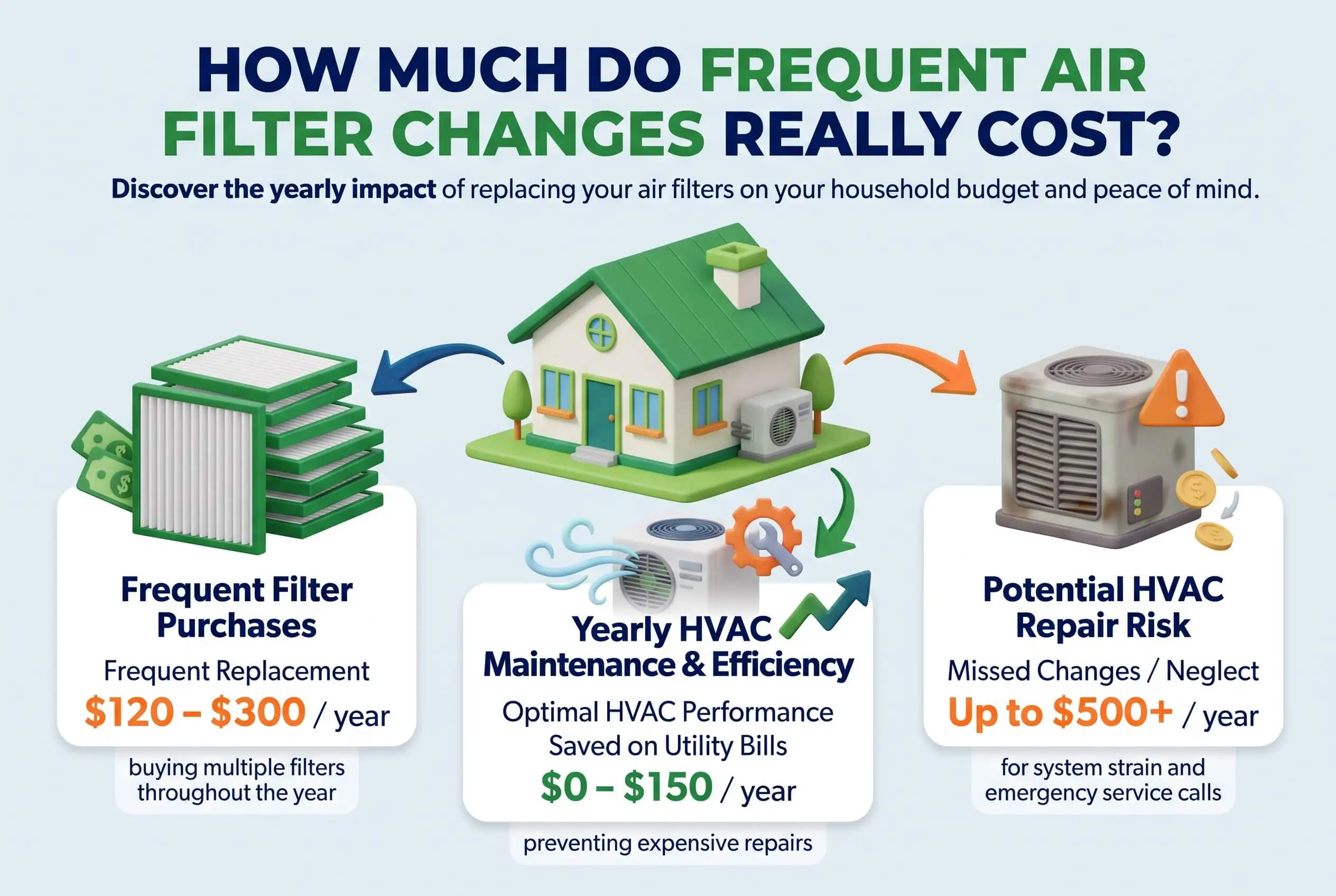
The first number is easy to pin down. Most households spend about $40 to $150 a year on filters, and you can find your own total by multiplying what one filter costs by how often you change it and how many filters your system holds. The second number explains why changing filters more often can leave you spending less overall.
TL;DR Quick Answers
air filter replacement
Air filter replacement means swapping the disposable filter in your furnace or AC for a clean one, usually every 60 to 90 days. Your bill shows a clog before your eyes do. A clogged filter makes your system run longer, and a fresh one can cut air conditioner energy use by 5% to 15%.
How often: Every 60 to 90 days for most homes, and sooner with pets, allergies, or construction dust nearby.
How to check: Hold the filter up to a light. If light barely passes through, replace it.
Right fit first: Match the exact size printed on the frame, and choose MERV 8 filter based on your household.
What it costs: Most homes spend about $40 to $150 a year on filters.
Why it pays off: A clean filter keeps your blower and coil from working overtime, so the equipment lasts longer and your energy bill stays lower.
Top Takeaways
Your yearly cost comes down to price per filter, changes per year, and the number of filters your system holds.
Most homes spend between $40 and $150 a year.
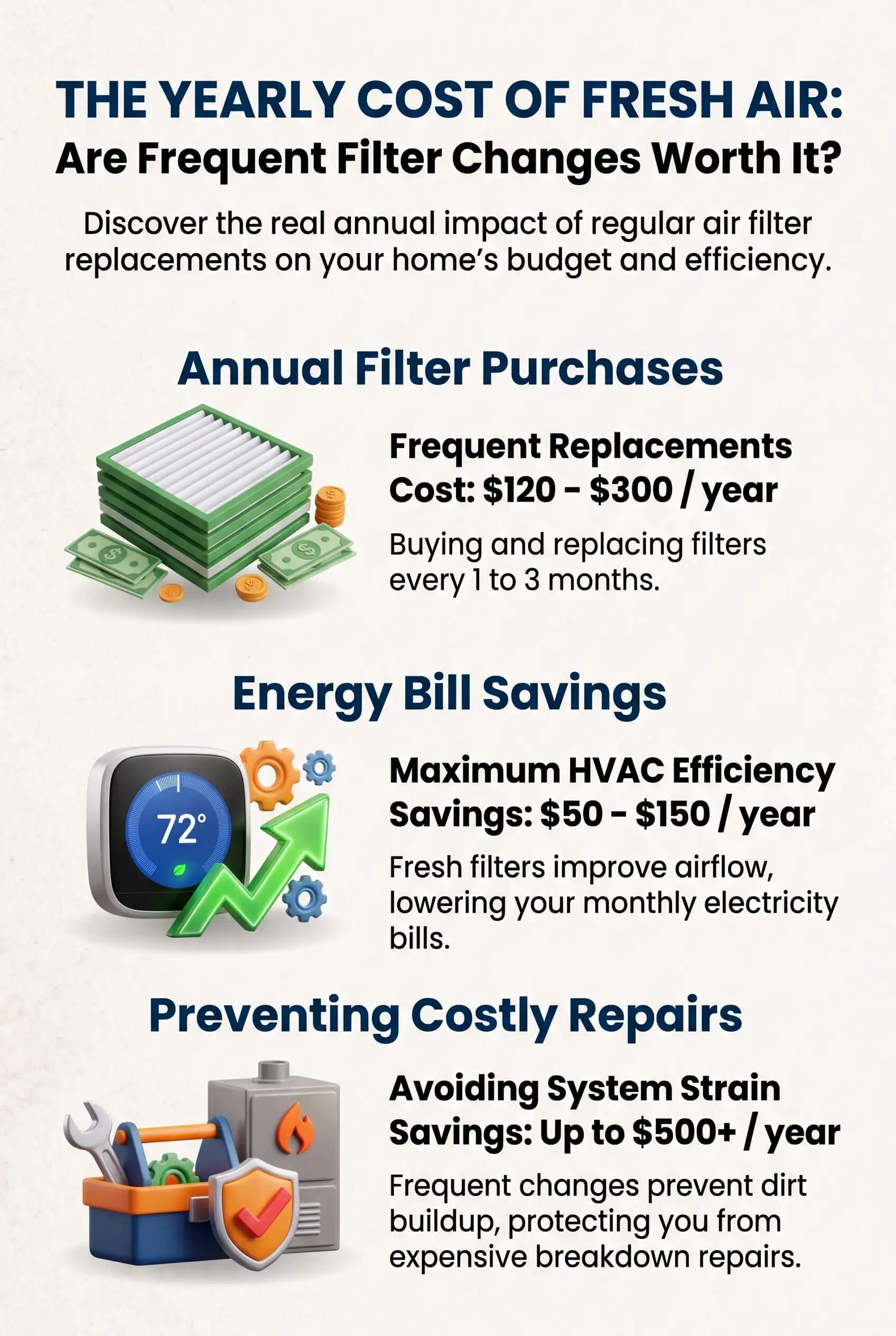
A clean filter can cut air conditioner energy use by 5% to 15%, which often covers the price of a couple of extra filters.
How full a filter gets affects energy use more than whether it's rated MERV 10 or MERV 13.
Buying multi-packs, checking monthly, and sticking to a schedule keep your spending low.
What Drives Your Annual Air Filter Replacement Cost
An air filter is about as simple as home parts get, yet four choices around it decide your yearly total.
Filter type and MERV rating: Fiberglass filters cost the least because they catch the least. Pleated filters rated MERV 8 to 13 cost more apiece and trap much finer dust, pollen, and pet dander. If the numbers on the box leave you guessing, this guide to how MERV ratings work sorts them out.
Size and depth: A 1-inch filter is cheap per piece but fills fast. Thicker 4-inch and 5-inch media filters cost more up front and can last 6 to 12 months.
How often you change it: Frequency multiplies everything else, so it moves your total the most.
How many filter slots you have: Two returns or two systems means buying two filters every time. If you're unsure what yours take, the standard filter sizes list is a good place to start.
The Simple Math Behind Your Yearly Filter Spend
Price per filter, times changes per year, times number of filters. That's the whole formula, and here's how it plays out in a few common homes.
A typical home with a 1-inch pleated filter, changed every 90 days: Four filters at about $10 each comes to roughly $40 a year.
A home with a dog or cat, same filter every 60 days: Six filters land near $60. During the heavy shedding season, monthly changes can push that toward $120.
A 4-inch media filter swapped every 6 months: Two filters at about $35 each runs around $70 a year.
None of those numbers will break a household budget. The expensive part shows up when a filter overstays its welcome.
Why Changing Filters More Often Can Cost You Less
Here's what happens inside the return vent while nobody's looking. Every hour your system runs, the filter catches a little more dust. As the pleats pack tight, the blower pulls harder to move the same air, so it runs longer to reach your thermostat setting. You won't hear the difference. You'll see it on the bill.
The U.S. Department of Energy estimates that replacing a dirty, clogged filter with a clean one can cut an air conditioner's energy use by 5% to 15%. Put that against a $600 summer cooling bill, and a clogged filter could be costing you $30 to $90 a season, which is more than the two or three extra filters it takes to stay ahead of the clog.
A lot of homeowners worry that a higher MERV rating will drive up energy use on its own. Berkeley Lab field research found that MERV 10 to 13 filters had only a small effect on energy use in the homes it studied. How full the filter gets matters far more than the number printed on the frame, which is why an air filter delivery service can help you stay on schedule with replacements.
What a Skipped Filter Change Costs You
A higher bill: Longer run cycles stack up over an entire cooling or heating season.
A dirtier system: Once airflow drops, dust can slip around the filter and settle on the evaporator coil, where it keeps the coil from absorbing heat.
Extra wear: A strained blower motor and a coated coil are exactly the problems that end in a service call, and one visit usually costs more than a full year of filters.
Dustier air: A packed filter catches less, so more dust and pet dander stay in the rooms where your family spends its time.
Ways to Lower Your Yearly Filter Spend
Buy your exact size in multi-packs. Per-filter prices usually drop when you buy several at once. Spares on the shelf also mean you change on time instead of waiting for the next store run.
Match the MERV rating to your household. A home without pets or allergies usually does fine with MERV 8. Save the higher ratings for homes that need them and systems built to handle them.
Check monthly, then change it when it's dirty. Hold the filter up to a light. If you can barely see through it, swap it out.
Put it on a schedule. A recurring phone reminder or scheduled delivery keeps a $10 chore from growing into a $90 problem.
Look honestly at washable filters. They cut ongoing costs. They also need regular rinsing and full drying, and most capture less than a good pleated filter.
How Often Should You Replace Your Air Filter?
The EPA Guide to Air Cleaners in the Home notes that manufacturers typically recommend a new filter every 60 to 90 days, and that a heavily soiled filter means it's time to change sooner. Start there, then adjust for the people and pets who share your home.
No pets or allergies: every 90 days
One pet: about every 60 days
Multiple pets, allergies, or nearby construction: every 30 to 45 days
Vacation home or single occupant: up to 6 months
Never swapped one before? This walkthrough on how to change a furnace filter takes you through it step by step.
"In my experience servicing forced-air systems, the homes with the highest summer bills rarely have bad equipment, just a six-month-old filter, a blower running almost nonstop against it, and a coil caked with the dust that slipped past. A $10 filter swap fixes more of those calls than any repair I could sell."
7 Essential Resources
Replacement Air Filters by Size: Shop 1-inch through 5-inch filters in MERV 8, 11, and 13, with delivery on a schedule you set.
ENERGY STAR Heating and Cooling Maintenance Checklist: Calls for inspecting, cleaning, or changing filters once a month.
EPA: Air Cleaners and Air Filters in the Home: Where a whole-home HVAC filter fits in a bigger plan for cleaner indoor air.
ASHRAE: Residential IAQ Guideline on High-Efficiency Filters: Why pressure drop and airflow belong in every filter decision.
Building America Solution Center: High-MERV Filters: Practical guidance on replacement timing, static pressure, and writing the install date on the frame.
American Lung Association: Clean Air Indoors: The everyday pollutants that build up inside homes, from dust mites to mold spores.
Berkeley Lab: System Effects of High Efficiency Filters in Homes: A year of field data from 10 homes on filter loading, blower power, and energy use.
Maintaining clean indoor air starts with choosing the right HVAC filter, checking it monthly, and replacing it before dust buildup restricts airflow. Resources from ENERGY STAR, EPA, ASHRAE, and Berkeley Lab explain how proper filtration supports healthier indoor environments and energy efficiency, complementing the broader air quality goals of the Clean Air Act.
3 Supporting Statistics
5% to 15%: That's how much the U.S. Department of Energy says a clean filter can cut an air conditioner's energy use compared with a dirty, clogged one. (U.S. Department of Energy)
19%: Air conditioning used more electricity than anything else in U.S. homes in 2020, at 19% of the total. (U.S. Energy Information Administration)
Nearly half: Researchers studying 84 homeowners in Rochester, New York, found dirty furnace filters in almost half of their homes. (National Center for Healthy Housing)
Final Thoughts and Opinion
I'll say it plainly: stretching a filter an extra month to save $10 is one of the worst trades in home maintenance. The filter is the cheapest line item in your heating and cooling budget. It's also the easiest one to forget, which is why it does so much quiet damage.
What I'd recommend is simple. Buy the right size in a multi-pack, check it on the first of every month, and change it the moment it turns gray. That habit costs a few dollars a season and protects both your equipment and the air your family breathes, with a lower energy bill as a bonus.
Frequently Asked Questions
Is Air Filter Replacement Cheaper If I Buy Filters in Bulk?
Usually, yes. Multi-packs tend to bring the per-filter price down, and spares on hand mean you change on time instead of putting it off. Confirm your exact size before you order, because a bargain pack in the wrong size saves you nothing.
Do Higher MERV Filters Cost More Per Year?
Each filter costs more, and in a dusty home a higher-rated filter can fill faster, so your yearly total climbs. Berkeley Lab's field research found MERV 10 to 13 filters had little effect on energy use, which means most of the added cost is the filter itself.
Is Changing My Air Filter Every Month Worth the Cost?
In homes with several pets, allergies, or construction dust nearby, it often is. Monthly changes add roughly $60 to $80 a year over a 90-day schedule, and lower energy use can win back part of that. Everyone else can check monthly and change only when the filter looks dirty.
Are Washable Air Filters Cheaper Over Time?
They can be, since you buy one filter instead of several each year. In exchange, you'll rinse it regularly, let it dry completely so mold can't take hold, and accept lower capture than most pleated filters offer.
How Do I Know If I Am Changing My Filter Too Often?
Pull the filter and hold it up to a light. If it still looks nearly white and light passes through easily, you can stretch the interval a bit. A few months of monthly checks will show you the schedule your home actually needs.
Keep Frequent Air Filter Changes Affordable All Year
Frequent air filter changes cost far less each year than the wasted energy and repair bills a clogged filter leaves behind. Find your filter size, set a schedule that fits your household, and let a properly maintained air filter keep your system running clean and your family breathing easier for just a few dollars a season.


