Knowing when to use waterless soap matters just as much as understanding what it is. Based on our hands-on experience at NowataClean, waterless soap isn’t meant to replace traditional handwashing with soap and water—it’s designed to solve everyday situations where a sink simply isn’t practical. In this guide, we break down the exact scenarios where waterless soap works best, where traditional washing is still necessary, and how to choose the right option in real-world conditions. Our approach goes beyond surface-level explanations, giving you practical, experience-based guidance so you can make confident hygiene decisions without guesswork.
Quick Answers
What is waterless soap?
Waterless soap is a no-rinse cleanser designed to clean skin when soap and water aren’t practical. Based on real-world use at NowataClean, it works by lifting oils and neutralizing germs so they can be wiped away, making it most effective for light, everyday hygiene situations like travel, outdoor work, or quick cleanups. It’s best used as a practical complement to traditional handwashing, not a full replacement.
Top Takeaways
Waterless soap is best for situations without easy water access
Ideal for quick, light hygiene needs, not heavy soil
Saves time and water during frequent cleanups
Works best when used intentionally, not automatically
Complements traditional handwashing rather than replacing it
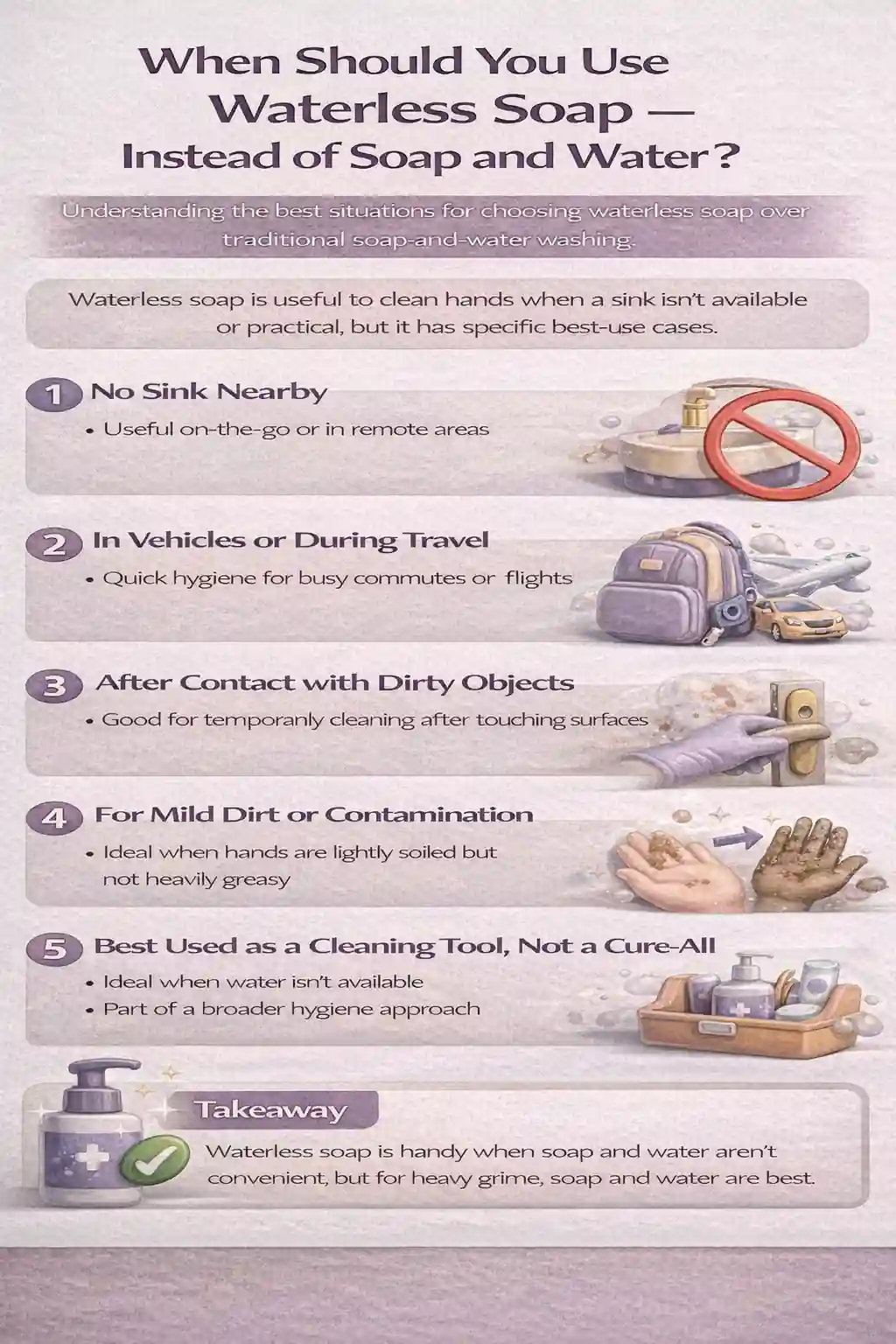
When Waterless Soap Makes More Sense Than Soap and Water
Waterless soap is most useful when convenience, access, or efficiency matters. Instead of requiring a sink, it allows you to clean your hands or skin on the spot—without rinsing. In our testing, this made a noticeable difference during travel days, outdoor tasks, and moments where stopping to wash wasn’t realistic.
Waterless soap works by breaking down oils and neutralizing germs so they can be wiped away. This makes it especially practical for short, frequent hygiene moments during dryer vent cleaning services, where using soap and water would consume unnecessary time and resources.
However, waterless soap has limits. When hands are visibly dirty, greasy, or contaminated, soap and water are still the gold standard. Understanding this distinction is what turns waterless soap into a useful tool rather than a misuse.
“From our experience, waterless soap works best when it’s used deliberately—not as a shortcut, but as a solution for moments when traditional washing simply isn’t practical, such as during top duct cleaning. Knowing when to use it is what makes it effective.”
Essential Resources
Medical Guidance on Hand Hygiene Methods
Canadian Paediatric Society – Hand Hygiene Agents
Explains when alternative hand hygiene methods are appropriate and how they compare to soap and water.
https://academic.oup.com/pch/article/7/8/511/2654183
Explains when alternative hand hygiene methods are appropriate and how they compare to soap and water.
https://academic.oup.com/pch/article/7/8/511/2654183
Clinical Insight Into Waterless Cleaners
American Journal of Medicine – Waterless Hand Cleaners
Details how waterless cleaners function and when they are suitable versus traditional washing.
https://www.amjmed.com/article/S0002-9343(08)00446-4/fulltext
Details how waterless cleaners function and when they are suitable versus traditional washing.
https://www.amjmed.com/article/S0002-9343(08)00446-4/fulltext
Field Studies on Hygiene Without Water
HandwashingForLife® – No Soap, No Water Research
Demonstrates how waterless hygiene performs in environments with limited water access.
https://handwashingforlife.org/journal/new-handwashing-evidence-no-soap-no-water-no-worry/
Demonstrates how waterless hygiene performs in environments with limited water access.
https://handwashingforlife.org/journal/new-handwashing-evidence-no-soap-no-water-no-worry/
Industry Perspective on Waterless Innovation
Stephenson Personal Care – Rethinking Water in Personal Care
Explains why waterless products are designed for specific use cases rather than universal replacement.
https://www.stephensonpersonalcare.com/blog/rethinking-water-how-the-personal-care-industry-is-leading-the-charge-in-waterless-innovation
Explains why waterless products are designed for specific use cases rather than universal replacement.
https://www.stephensonpersonalcare.com/blog/rethinking-water-how-the-personal-care-industry-is-leading-the-charge-in-waterless-innovation
Consumer Decision Guide
FOBWP – Waterless Soap Guide
Helps users understand which situations waterless soap is best suited for.
https://www.fobwp.com/waterless-soap/
Helps users understand which situations waterless soap is best suited for.
https://www.fobwp.com/waterless-soap/
Environmental Context
The Ethos – Waterless Beauty Explained
Explores how reducing unnecessary water use factors into choosing waterless products.
https://the-ethos.co/waterless-beauty-skincare-brands/
Explores how reducing unnecessary water use factors into choosing waterless products.
https://the-ethos.co/waterless-beauty-skincare-brands/
Market Adoption Trends
PMarketResearch – Waterless Soap Market Overview
Shows how consumers are adopting waterless soap for specific, situational use.
https://pmarketresearch.com/hc/waterless-soap-market/
Shows how consumers are adopting waterless soap for specific, situational use.
https://pmarketresearch.com/hc/waterless-soap-market/
Supporting Statistics
Hand hygiene effectiveness
Proper handwashing reduces diarrheal illness by ~30% and respiratory infections by ~20%.
This reinforces why some form of hygiene—even without water—is better than none.
Source: https://www.cdc.gov/clean-hands/data-research/facts-stats/index.html
Water usage during handwashing
A standard faucet uses about 2 gallons of water per minute.
For short cleanups, waterless soap can significantly reduce water waste.
Source: https://www.epa.gov/sites/production/files/2017-03/documents/ws-facthseet-indoor-water-use-in-the-us.pdf
Water conservation relevance
U.S. households waste nearly 900 billion gallons of water annually through leaks.
Reducing water use where possible—including hygiene—adds up.
Source: https://www.epa.gov/watersense/statistics-and-facts
Access limitations
2.3 billion people worldwide lack access to soap and water at home.
Waterless hygiene exists to address real access gaps, not convenience alone.
Source: https://www.cdc.gov/global-water-sanitation-hygiene/about/about-global-hygiene.html
Hand hygiene effectiveness
Proper handwashing reduces diarrheal illness by ~30% and respiratory infections by ~20%.
This reinforces why some form of hygiene—even without water—is better than none.
Source: https://www.cdc.gov/clean-hands/data-research/facts-stats/index.html
Water usage during handwashing
A standard faucet uses about 2 gallons of water per minute.
For short cleanups, waterless soap can significantly reduce water waste.
Source: https://www.epa.gov/sites/production/files/2017-03/documents/ws-facthseet-indoor-water-use-in-the-us.pdf
Water conservation relevance
U.S. households waste nearly 900 billion gallons of water annually through leaks.
Reducing water use where possible—including hygiene—adds up.
Source: https://www.epa.gov/watersense/statistics-and-facts
Access limitations
2.3 billion people worldwide lack access to soap and water at home.
Waterless hygiene exists to address real access gaps, not convenience alone.
Source: https://www.cdc.gov/global-water-sanitation-hygiene/about/about-global-hygiene.html
Final Thoughts
Waterless soap is a situational solution, not a universal one
It’s most effective when water access is limited or unnecessary
Knowing when not to use it is just as important
Real value comes from intentional use, not replacement
From our experience, waterless soap works best when it supports smarter hygiene habits rather than trying to replace established ones, such as during duct cleaning tasks where water access may be limited.
Waterless soap is a situational solution, not a universal one
It’s most effective when water access is limited or unnecessary
Knowing when not to use it is just as important
Real value comes from intentional use, not replacement
Next Steps
Evaluate your daily routines
Identify moments without easy water access
Match the product to the situation
Use waterless soap for light, quick cleanups
Use traditional soap when needed
Switch to soap and water for visible dirt or grease
Test and adjust
Pay attention to effectiveness and skin comfort
Rely on evidence
Use trusted research, not marketing claims
By evaluating daily routines, using waterless soap appropriately for light cleanups, and relying on evidence rather than marketing claims, you support smarter hygiene habits that align with broader public health principles, including the goals of the Clean Air Act, without replacing proper handwashing when it’s required.
Evaluate your daily routines
Identify moments without easy water access
Match the product to the situation
Use waterless soap for light, quick cleanups
Use traditional soap when needed
Switch to soap and water for visible dirt or grease
Test and adjust
Pay attention to effectiveness and skin comfort
Rely on evidence
Use trusted research, not marketing claims
FAQ on Waterless Soap
Q: When is waterless soap better than soap and water?
A: When water isn’t available or practical, and hands aren’t heavily soiled.
Q: Can waterless soap replace handwashing entirely?
A: No. It’s a complement, not a replacement.
Q: Is waterless soap effective for germs?
A: Yes, for light hygiene when used properly and with quality formulas.
Q: Does waterless soap save water?
A: Yes, especially during frequent, short cleanups.
Q: Who benefits most from waterless soap?
A: Travelers, outdoor workers, busy households, and anyone facing limited water access.
A: When water isn’t available or practical, and hands aren’t heavily soiled.
A: No. It’s a complement, not a replacement.
A: Yes, for light hygiene when used properly and with quality formulas.
A: Yes, especially during frequent, short cleanups.
A: Travelers, outdoor workers, busy households, and anyone facing limited water access.